
REVIEW · TOKYO
Tokyo: Shinjuku Bar Hopping & Night Walking Tour
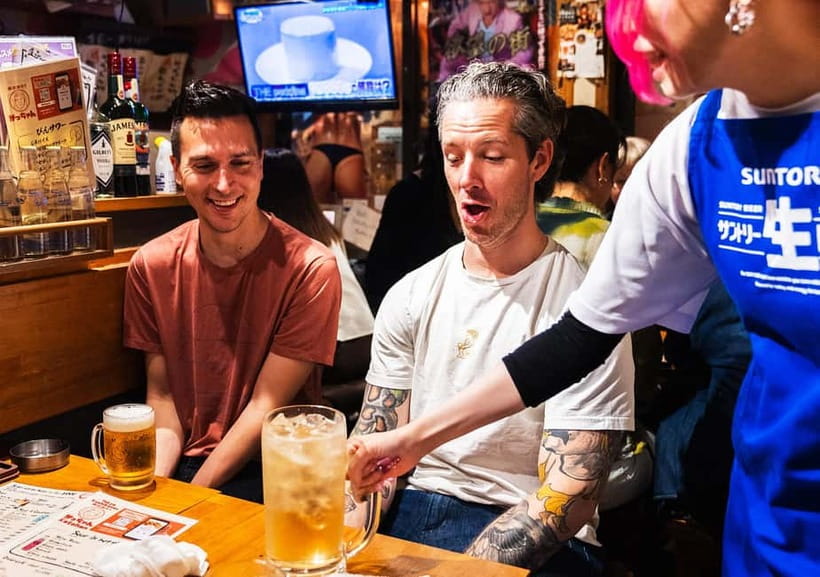
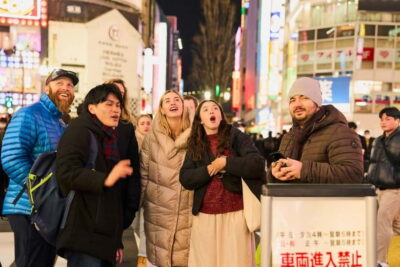
Shinjuku after dark is best understood one tiny doorway at a time. This three-hour walk takes you from lantern-lit Omoide Yokocho to neon-filled Kabukicho and the narrow lanes of Golden Gai, with a local guide handling the tricky part: getting you into small places where a first-time visitor might hesitate to walk in.
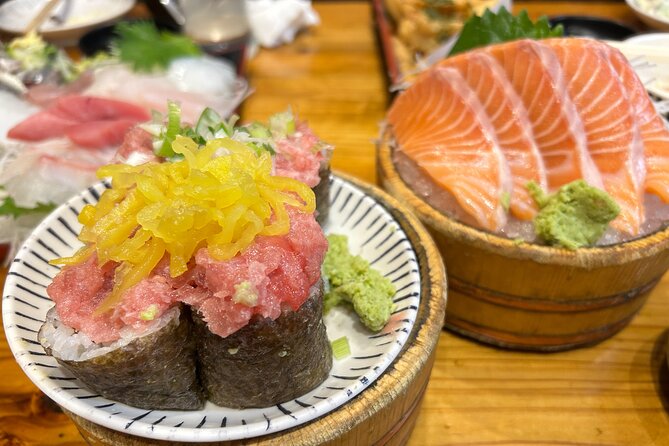
I like the way the tour combines food with cultural context, rather than treating Shinjuku as a parade of bright signs. I also like the chance to meet other people while trying sushi, kushikatsu, gyoza, beer, and sake in three different settings. The main catch is simple: the $30 price covers the walk and guide, but not your food or drinks, and some bars may require standing.
Key points to know before you book
- Three very different Shinjuku neighborhoods: Omoide Yokocho, Kabukicho, and Golden Gai each show a different side of nightlife.
- Your guide makes small bars easier: Reservations and local connections help you enter places that may not welcome walk-in newcomers.
- Food and drinks cost extra: Bring cash, since the $30 booking price does not include what you order.
- Guides shape the evening: Ayaka, Yuki, Hajime, Chihiro, Shun, and others have been praised for friendly conversation, sake advice, and cultural explanations.
- Karaoke may appear, but it is not the whole tour: Some evenings finish in a small karaoke bar, while the exact route can change.
- This is best for adults who enjoy drinking: Japanese law permits alcohol only for people age 20 and over, and the tour is less suitable if you do not drink.
Why this Shinjuku night walk is worth your evening
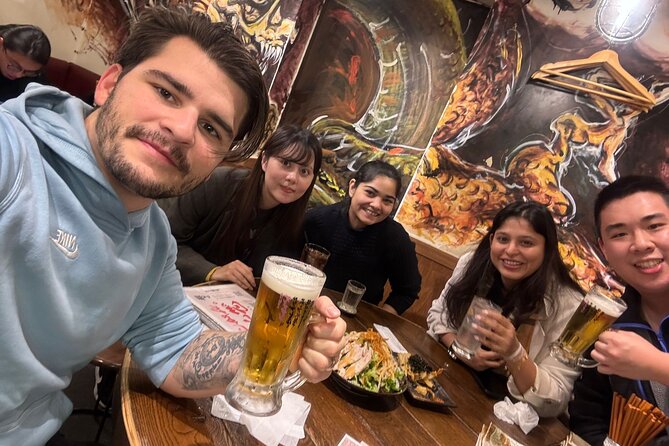
Shinjuku can feel like three cities stacked on top of each other. There are enormous station exits, electric signs, department stores, office crowds, arcades, narrow food lanes, and tiny bars packed into buildings that are easy to miss.
A guide gives the evening shape. Instead of wandering until you find a place with an empty table, you move through three well-known areas with someone who can explain what you are seeing and help you order. That matters in Shinjuku, where the smallest and most interesting restaurants can have limited seating, Japanese menus, or customs that are not obvious at first glance.
The tour costs $30 per person, which is a reasonable guiding fee for three hours in one of Tokyo’s most complicated nightlife districts. You should judge the total cost differently, though. Food and drinks are extra, so your final bill depends on what you order and how much you drink. The value is not an all-inclusive dinner. It is access, orientation, conversation, and the confidence to return to these neighborhoods on your own.
The experience has earned a 4.6 rating from 137 bookings, with particular praise for the guides. Ayaka is repeatedly described as warm and well informed. Yuki is praised for food, drink, and local history suggestions. Hajime has helped solo visitors feel comfortable, while Chihiro has been singled out for taking people to places they would not have found alone.
Those details matter more than a polished route. The exact guide can affect the mood, but the strongest pattern is clear: the evening works best when the guide acts as a friendly bridge between you and the city.
More bar crawls in Tokyo:
- Tokyo Bar Hopping Tour in Shinjuku (All-You-Can-Drink + Dinner)
★ 5.0 · 3,587 reviews - Tokyo: Shinjuku Local Bar and Izakaya Guided Walking Tour
★ 4.9 · 1,794 reviews - Shibuya Meltdown Nightlife Tour: All-You-Can-Drink Bar Hopping
★ 5.0 · 1,058 reviews
Meeting at the East Exit police box
The starting point is the Shinjuku Station East Exit Police Box, at 3-38-1 Shinjuku, Shinjuku-ku. Look for a guide holding a Local Guide Stars sign.
Shinjuku Station is huge, and arriving early is wise. The tour starts on time, and if you miss the group, there is no refund or rescheduling. Allow extra time to find the East Exit, especially if you have just arrived in Tokyo or are carrying luggage.
The route is on foot. The listed walking time between the meeting point and the first stop is about five minutes, followed by roughly one hour in each of the three main areas. The tour finishes back at the same police box after another short walk, although food service or a crowded bar can push the finish later than planned.
Bring cash. It is the most useful practical tip for this experience, since food and drinks are not included and some small establishments may not be set up for the payment method you normally use.
Omoide Yokocho: lanterns, office crowds, and tiny tables
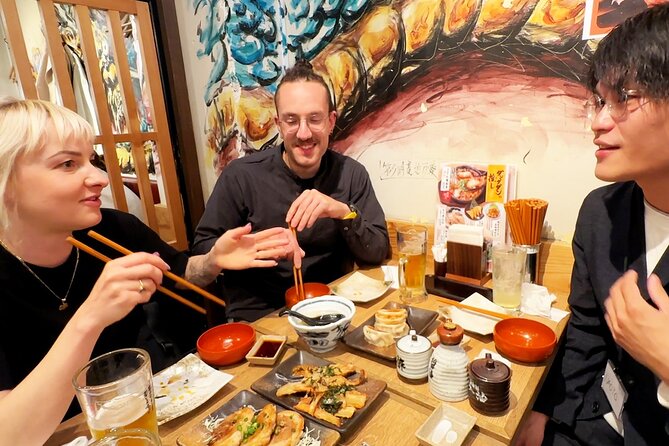
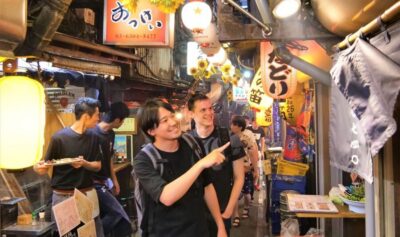
The first main stop is Omoide Yokocho, a narrow food alley marked by red lanterns and compact restaurants. It has a more intimate feel than the giant signs of central Shinjuku. The small counters and after-work crowds show you how local drinking often works: short meals, shared plates, quick drinks, and conversation close to the kitchen.
This is where having a guide pays off immediately. Seating is limited, and restaurants can fill with office workers after the working day. The tour organizers handle reservations, so you do not have to stand outside wondering if a place has room.
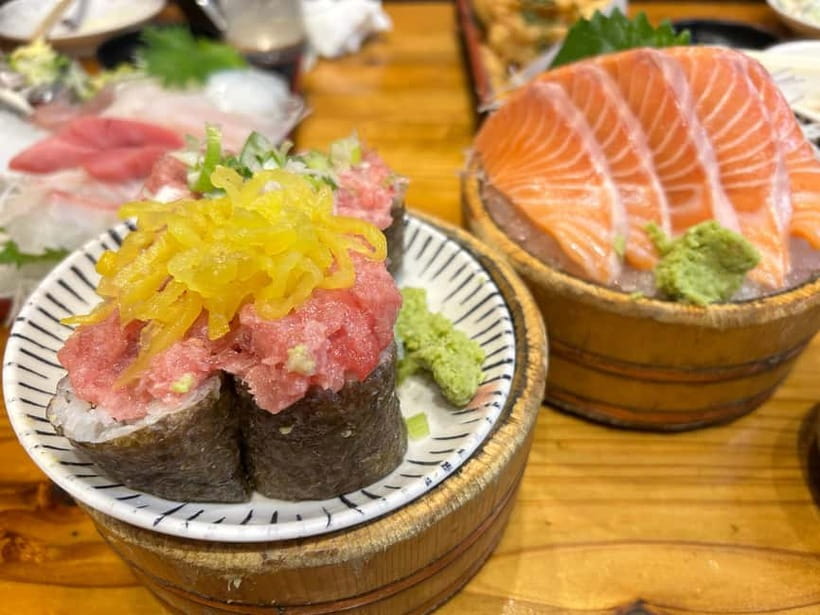
The food may include sushi, gyoza, or other local dishes, depending on the evening. You can expect bar food rather than a formal multi-course meal. That is part of the point. You are sampling the kind of dishes that pair well with beer or sake while learning how an izakaya works.
Do not expect a spacious dining room. Some places are so small that standing may be required. If you prefer quiet meals, wide aisles, and plenty of personal space, this first stop may feel cramped. If you like seeing the kitchen, listening to the room, and watching a working neighborhood at close range, it is a strong introduction.
Kabukicho: neon, arcades, and Tokyo after dark
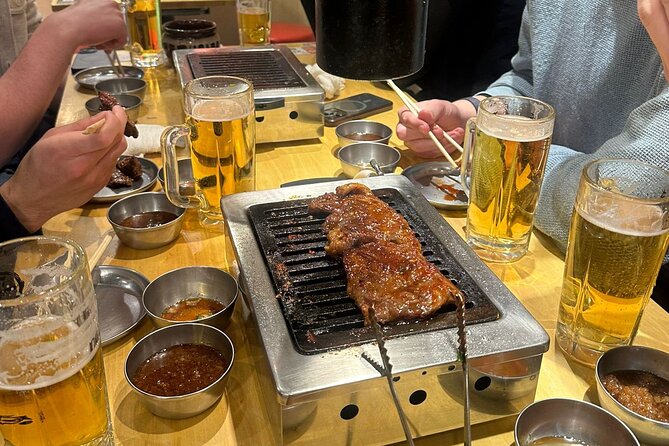
The walk then moves into Kabukicho, Japan’s best-known entertainment district. This is the most visually dramatic part of the route, with glowing signs, busy streets, arcades, shops, and a steady flow of people.
The guide’s role here is not only to point at the neon. You learn how this district fits into Shinjuku’s nightlife and how to read the difference between a place aimed at locals, a restaurant designed for a quick meal, and a bar that may be difficult for a newcomer to enter.
The food and drink stop in Kabukicho gives the tour a change of pace. Crispy kushikatsu, juicy gyoza, Japanese beer, wine, or spirits may appear, though the precise menu depends on the restaurants visited that evening. Some guides also recommend less familiar drinks. One evening included matcha alcohol, while another featured a sake tasting with an explanation of how the different types compared.
That variety is one of the tour’s strengths. You are not simply ordering a familiar lager at three locations. You have a chance to ask what you are drinking and why a particular dish works with it.
Kabukicho can also feel intense. It is crowded, loud, and visually busy, and the atmosphere may not suit everyone. Stay close to the guide and group while walking. If you want a calm, slow tour with long stops at historic buildings, this is not that experience. If you want to see Shinjuku as it really operates at night, Kabukicho provides the clearest look.
Same city, another round:
- Tokyo: Pub Crawl and Bar Tour
★ 4.5 · 951 reviews - Tokyo: Shinjuku Local Bar & Izakaya Crawl Tour
★ 5.0 · 890 reviews - Tokyo: Shinjuku Bar Hopping with All-You-Can-Drink & Dinner
★ 4.9 · 440 reviews - Shibuya: Local Bar & Izakaya Crawl
★ 4.9 · 354 reviews
Golden Gai: the smallest bars and the most personal stop
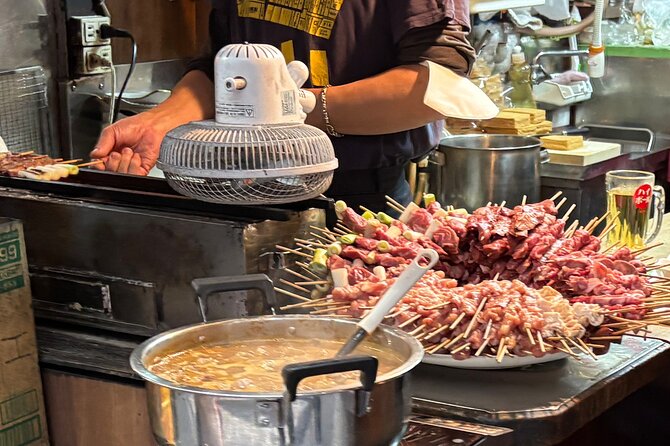
Golden Gai is the final main area, and it is usually the part people are least likely to manage comfortably on their own. Its narrow lanes contain hundreds of tiny bars, many with only a few seats and strong house rules.
The guide’s local connections can help you enter bars that do not normally welcome unknown customers. That does not mean every night follows the same script. The route can change, and the final bar depends on availability, group needs, and the atmosphere that evening.
You might finish with local beer, sake, spirits, or a small karaoke bar. Several guides have used karaoke to bring the group together, and some people continue singing after the official tour ends. Another evening included a bartender who helped make the stop especially social.
Karaoke is also the clearest limitation. One person found the drinks there expensive and would have preferred more time walking around Golden Gai. If singing in a small bar is not your idea of fun, ask about the likely plan before booking. The tour promises access to the area and its bars, not a guaranteed karaoke session or a specific final venue.
Golden Gai rewards curiosity. The rooms are close, the seating can be tight, and language differences are part of the setting. You may need patience when ordering or sharing a table. The payoff is a much more personal night than simply taking photographs of the outside lanes.
Food, sake, and what your $30 actually buys
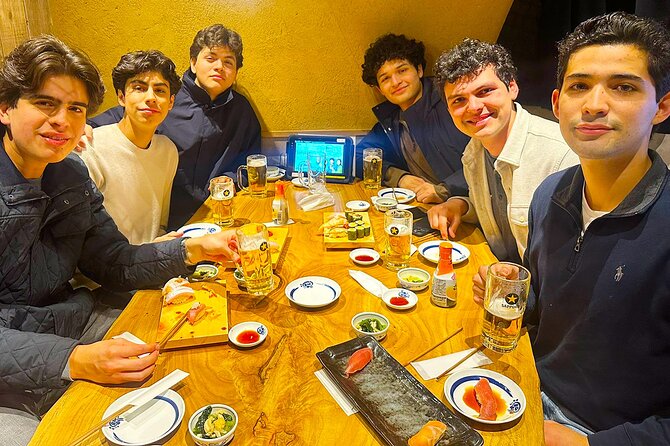
The advertised $30 covers the walking tour, local guide, and photos taken during the experience. It does not cover food or drinks. That distinction deserves attention because the evening includes three stops described as dinner locations.
You should budget for several small orders and drinks in addition to the booking fee. The exact amount is not stated, and it will depend on your appetite, alcohol choices, and the prices at the venues used that night. Ask your guide about costs as you go, especially before ordering premium sake or drinks at a tiny bar.
The food focus is broad rather than fixed. Possible tastes include:
- Fresh sushi
- Crispy kushikatsu
- Juicy gyoza
- Japanese beer and wine
- Traditional sake
- Local spirits and unusual flavored drinks
A sake tasting can add real value because the guide explains differences between the samples instead of leaving you to choose from an unfamiliar menu. If you are new to sake, this is a useful chance to ask about flavor, serving style, and how it fits with food.
Vegetarian choices exist but are limited. Most Japanese restaurants are not fully equipped with vegetarian menus, so tell the provider about your dietary needs in advance and keep expectations realistic. The guide may help you find suitable dishes, but this is not presented as a dedicated vegetarian food tour.
The guides are the heart of the experience
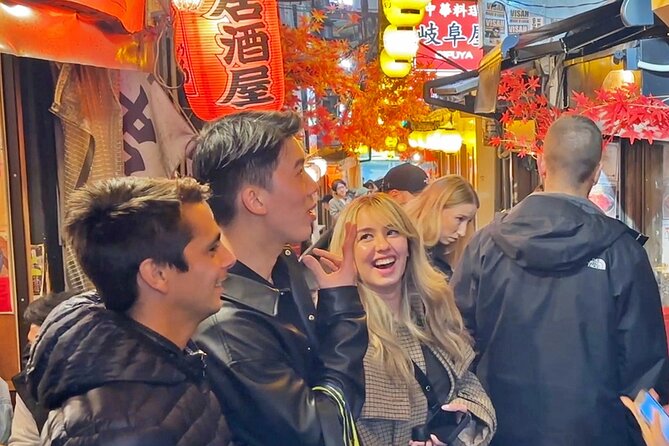
The route is appealing, but the guide determines how much you get from it. A strong guide turns streets and menus into a conversation about Japanese drinking customs, neighborhood life, and food.
Ayaka is praised for being funny, well organized, and generous with food suggestions. Yuki is described as especially good at combining local history with bar bites, cocktails, beer, and sake. Hajime has been praised for making solo visitors feel at ease, while Chihiro is known for energy, humor, and taking people to shops that are hard to find online.
Other guides named in the bookings include Miko, Han, Shun, Ai, Luna, Nana, Aki, Maika, Naoto, Rino, and Naruto. You cannot choose a particular guide based on the supplied information, but these names show that the company uses a broad team rather than relying on one host.
Group size can vary. Some evenings have only one or four people, creating a more personal walk. Other groups include several people from different countries. A small group gives you more room to ask questions, while a larger one may make the social side more lively. The exact size is not guaranteed.
What could make the evening less comfortable
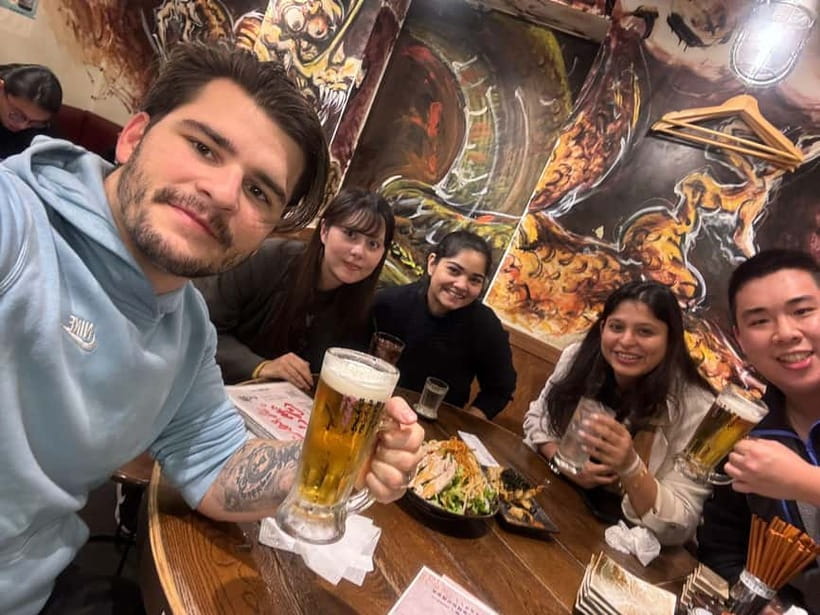
This is a night out, not a polished restaurant crawl. Seating may be limited, food service can be slow, and the tour may run longer than three hours if a restaurant is delayed.
You should also expect cultural and language differences. That is part of the reason to go with a guide, but it does not remove every awkward moment. Some bars have rules or customs that take explanation, and the tiny rooms may feel less private than you are used to.
The tour runs rain or shine. Wear shoes that are comfortable for walking and bring rain protection when needed. The route is not difficult in the sense of a hike, but you will be on your feet between stops and may need to stand at a bar.
Alcohol is central to the experience. People under 20 cannot drink under Japanese law, and anyone who does not drink may find that the tour lacks enough variety. You can ask about nonalcoholic choices, but the evening is built around izakayas and bars rather than museums or sightseeing stops.
Who should book this Shinjuku tour
I would recommend it to a first-time visitor who wants help getting oriented after dark. It is also a good fit for solo visitors, since the guide and group provide easy company without requiring you to arrange a full evening yourself.
Couples and small groups can use it as a low-pressure way to find places to return to later. Several people have wished they had booked it earlier in their trip, and that is sensible advice. Take the tour near the start of your stay, then revisit the neighborhoods with a better sense of where you want to eat and drink.
You should think twice if you want a fixed menu, guaranteed seating, or a quiet cultural walk. You should also avoid booking it if you strongly dislike alcohol, cramped rooms, or last-minute changes to the route.
Cancellation is free up to 24 hours before the start, and you can reserve now and pay later. Those options help if your Tokyo schedule is still moving, but they do not change the strict late-arrival rule.
Should you book it?
Book this tour if you want access and guidance, not an all-inclusive dinner. The $30 fee is fair for three hours of local orientation, especially if you would otherwise waste time searching for a table or miss the small lanes altogether.
Your best chance of loving it is to arrive on time, bring cash, stay open to unfamiliar food, and accept that the evening may include standing, slow service, or karaoke. If that sounds like a good night in Tokyo, this is a practical way to meet people and see Shinjuku beyond the main station signs.
FAQ
How long does the Shinjuku bar-hopping tour last?
The scheduled duration is three hours. Delays at restaurants or bars can make the evening run longer.
Where does the tour meet?
Meet in front of the Shinjuku Station East Exit Police Box, also called the Shinjuku Police Station Shinjuku East Exit Police Box, at 3-38-1 Shinjuku, Shinjuku-ku, Tokyo.
How do I find the guide?
The guide will be holding a Local Guide Stars sign near the police box.
Which neighborhoods does the tour visit?
The planned route includes Omoide Yokocho, Kabukicho, and Golden Gai. The route can change because of circumstances at the venues.
Are food and drinks included in the $30 price?
No. The price includes the walking tour, local guide, and photos, but food and drinks must be paid for separately.
Should I bring cash?
Yes. Cash is listed as an important item to bring, particularly because you will pay separately for food and drinks.
What types of food might be served?
Possible foods include sushi, kushikatsu, gyoza, and other local izakaya dishes. The exact food depends on the venues visited.
Is alcohol included?
No. Alcohol must be paid for separately. Possible drinks include beer, wine, sake, spirits, and other local or unusual drinks.
Can vegetarians join the tour?
Vegetarian choices are available but limited. Most Japanese restaurants are not fully equipped with vegetarian menus, so you should raise dietary needs before the tour.
Can people under 20 drink on the tour?
No. Japanese law allows only people aged 20 and over to drink alcohol.
What languages are available?
Live guiding is available in English and Japanese.
What happens if I arrive late?
The tour starts on time. If you miss the group, the provider does not offer a refund or rescheduling.
Does the tour run in bad weather?
Yes. The tour proceeds rain or shine.
Is karaoke guaranteed?
No. Some evenings include a small karaoke bar, but the route and venues can change.
New nights out around Tokyo
- Tokyo: WARP SHINJUKU Nightclub Ticket with Drink / VIP Plan★ 4.2 · 55 reviews
- Shinjuku Izakaya and Golden Gai Bar Hopping Tour★ 5.0 · 147 reviews
- Shibuya Meltdown Night Tour: All-You-Can-Drink Bar Hopping★ 4.8 · 183 reviews
- Tokyo: Shinjuku Local Bar Hopping Walking Tour★ 5.0 · 186 reviews
- Tokyo: Shibuya Local Bar & Izakaya Crawl Tour★ 5.0 · 218 reviews
- Tokyo: Shinjuku Nightlife & Secret Backstreets Walking Tour★ 4.8 · 229 reviews
- Shibuya: Local Bar & Izakaya Crawl★ 4.9 · 354 reviews
- Tokyo: Shinjuku Bar Hopping with All-You-Can-Drink & Dinner★ 4.9 · 440 reviews
Tokyo Bar Crawls, compared.
Tokyo Bar Hopping Tour in Shinjuku (All-You-Can-Drink + Dinner)
Read our review →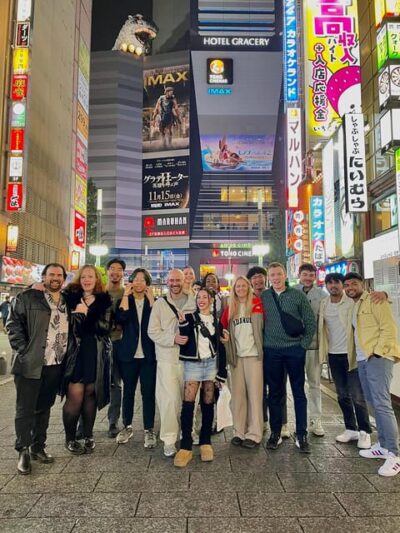
Shinjuku Local Bar and Izakaya Guided Walking Tour
Read our review →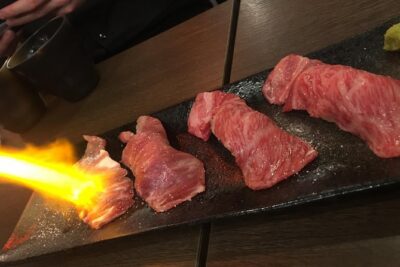
Shibuya Meltdown Nightlife Tour: All-You-Can-Drink Bar Hopping
Read our review →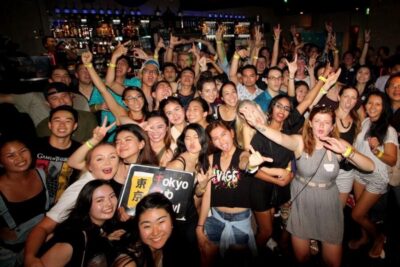

Shinjuku Bar Hopping with All-You-Can-Drink & Dinner
Read our review →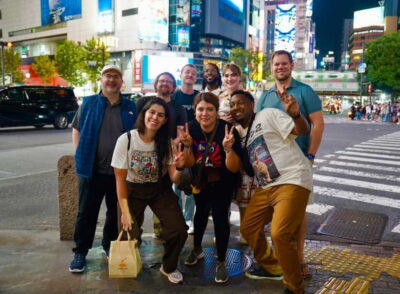
Shinjuku Nightlife & Secret Backstreets Walking Tour
Read our review →Browse the lists this tour appears in