
REVIEW · TOKYO
Conveyor Belt Sushi & Bar Hopping in Ebisu & Nakameguro
Tokyo nightlife makes the most sense when you stop chasing famous sights and follow the food. This three-hour walk links Nakameguro’s Koukashita with Ebisu’s old-school drinking alleys, mixing oden, conveyor belt sushi, sake, and Japanese cocktails.
I like two things right away: Taku’s local guidance and the small group limit of 10. You get room to ask questions, and the evening can feel more like a night out with a well-informed friend than a formal tour. The main drawback is that the $65.15 price may not cover every dish and drink, so check exactly what is included before booking.
Key points to know before you book
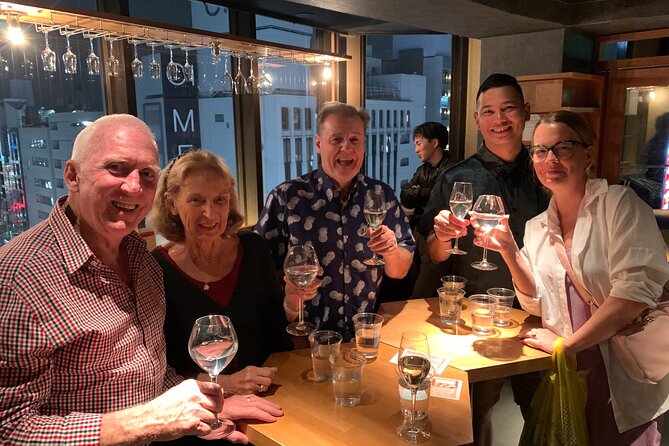
- Three food-and-drink stops: The evening includes oden at an izakaya, kaitenzushi in Nakameguro, and drinks in Ebisu Yokocho.
- A real small-group format: The maximum group size is 10 people, a useful limit in narrow alleys and compact restaurants.
- Taku leads in English: You can ask about food, customs, and Tokyo nightlife as you move between stops.
- Two different Tokyo moods: Nakameguro feels local and relaxed, while Ebisu Yokocho brings louder conversation and after-work energy.
- A practical evening length: At about three hours, this fits neatly into a Tokyo itinerary without taking over the whole night.
- Optional Shibuya Sky help: Taku can also assist with getting a Shibuya Sky ticket, but that is not the central activity.
Why this night works better than a standard food stop
Many Tokyo visitors eat well but miss the small social customs around eating and drinking. You may know what sushi or sake is, yet still wonder how people order, share food, or move from one bar to the next. A guide gives the evening some shape and helps turn a meal into a look at daily city life.
This experience focuses on places where locals gather after work. That matters because the appeal is not grand scenery or a long list of landmarks. It is the simple pleasure of sitting down, choosing something unfamiliar, and seeing how a neighborhood changes after dark.
The route also has a useful contrast. Nakameguro offers a quieter start, with food served in a cozy izakaya and a separate sushi stop. Ebisu ends the night with tighter spaces, more noise, and a retro alley lined with little bars and eateries.
I especially like that the tour does not treat Japanese food as a museum display. Oden is warm and plainspoken. Conveyor belt sushi is quick and playful. Ebisu Yokocho is social and informal. Together, the stops show three different ways people eat and drink in Tokyo.
More bar crawls in Tokyo:
- Tokyo Bar Hopping Tour in Shinjuku (All-You-Can-Drink + Dinner)
★ 5.0 · 3,587 reviews - Tokyo: Shinjuku Local Bar and Izakaya Guided Walking Tour
★ 4.9 · 1,794 reviews - Shibuya Meltdown Nightlife Tour: All-You-Can-Drink Bar Hopping
★ 5.0 · 1,058 reviews
Starting at Naka-meguro Station
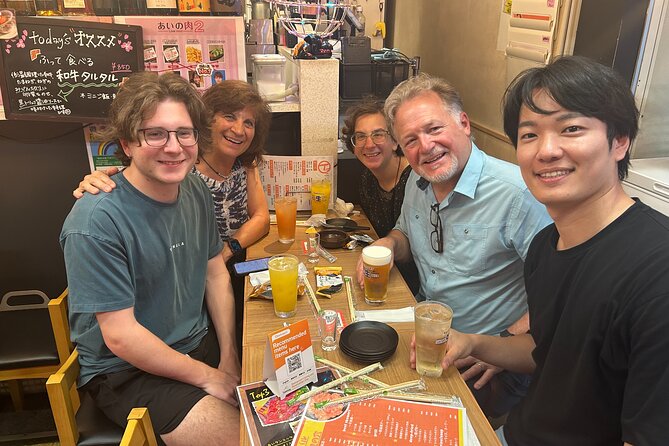
The meeting point is near Naka-meguro Station at 3-chōme-4-1 Kamimeguro, in Meguro City. Since the activity starts and ends at the same meeting point, you do not have to solve a second transportation puzzle late at night.
That return arrangement is helpful if you are still learning Tokyo’s rail system. It also makes the tour easier to combine with another plan nearby. You can begin the evening in the area and finish where you started, rather than ending in an unfamiliar district.
The experience is near public transportation, and most people can participate. You should still arrive ready to walk between stops and spend time in compact food and drink spaces. The available details do not give a precise walking distance or accessibility arrangement, so anyone with mobility concerns should ask before reserving.
Taku is the guide named for this experience. The evening is conducted in English, with cultural tips and stories along the way. That language support is valuable in small restaurants, where menus and ordering routines can move quickly.
Stop one: oden and local comfort food in Nakameguro Koukashita
The first stop takes you into a cozy izakaya in Nakameguro Koukashita. An izakaya is a Japanese drinking place that serves food, and this setting gives you a gentle introduction to the evening.
The featured food includes oden, a Japanese stew made with items such as daikon radish, tofu, and fish cakes. It is not flashy food. That is exactly the point. Oden is the sort of warm, easy meal that works well with a drink and encourages conversation.
You may find the food here more useful for understanding everyday Japanese eating than a high-end restaurant would be. Ingredients simmer together, portions can be shared, and the meal fits the after-work rhythm of an izakaya.
This is also a good first stop because it does not ask you to make complicated choices immediately. You can settle into the group, get a sense of Taku’s pace, and begin asking questions about what you are eating.
The stop lasts about 50 minutes. That is enough time for a proper taste and conversation, but not so long that the night becomes one extended meal. Because admission is listed as free, the important price question is what food and drinks you pay for during the stop. Confirm that point when booking.
Stop two: choosing sushi from a moving belt
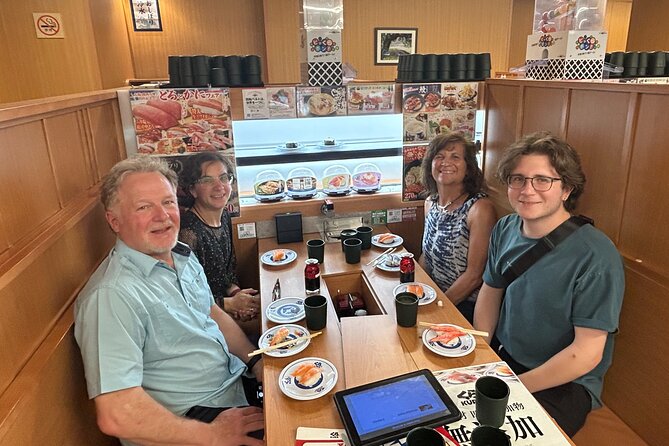
Next comes the most playful part of the evening: a visit to a popular kaitenzushi restaurant in Nakameguro. At a kaitenzushi restaurant, plates of sushi travel past you on a conveyor belt, and you choose what catches your eye.
This format is useful for first-time sushi diners because it gives you a visual menu. You do not have to describe every order from scratch. You can watch the plates pass, select what you want, and learn by seeing what is available.
I like the way this stop balances guidance with independence. Taku can explain the setting and answer questions, but you still get to make your own choices. That makes the meal feel less like a demonstration and more like an ordinary night out.
The restaurant stop lasts about 50 minutes. That keeps the pace moving, though it may feel short if you want a long, leisurely sushi meal. It is best approached as a tasting stop rather than the only dinner of the night.
The supplied details do not specify how many plates are included in the tour price. Sushi consumption can vary widely from person to person, so ask whether food, drinks, or a set amount is covered. The $65.15 fee may represent the guided experience rather than an all-you-can-eat meal.
For many people, this will be the most memorable stop. The conveyor belt adds a little theater, and the system is easy to understand once you see it in action. It also gives you a direct look at a common Japanese restaurant style without requiring a formal dining experience.
Same city, another round:
- Tokyo: Pub Crawl and Bar Tour
★ 4.5 · 951 reviews - Tokyo: Shinjuku Local Bar & Izakaya Crawl Tour
★ 5.0 · 890 reviews - Tokyo: Shinjuku Bar Hopping with All-You-Can-Drink & Dinner
★ 4.9 · 440 reviews - Shibuya: Local Bar & Izakaya Crawl
★ 4.9 · 354 reviews
Stop three: Ebisu Yokocho after work
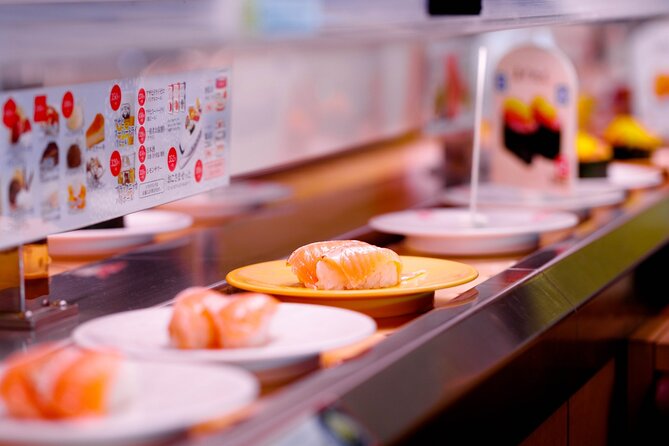
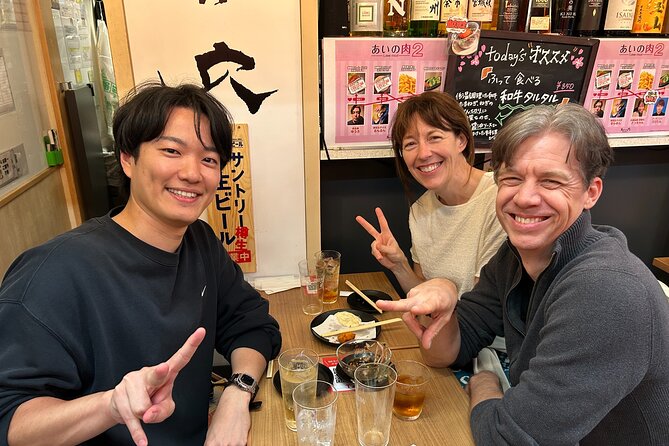
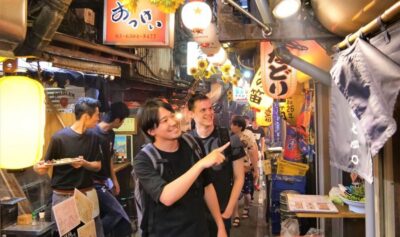
The final stop is Ebisu Yokocho, a retro-style alley packed with small bars and eateries. The mood shifts here. You move from the calmer rhythm of Nakameguro to a place built around laughter, conversation, sake, and shared food.
Ebisu Yokocho is a strong finish because it gives the night a social center. The alley is known as a place where people unwind after work, and the close-set bars create a feeling of movement even when you are sitting still.
You can expect sake and Japanese cocktails to be part of the experience here. The exact drink selection is not specified, so your guide can help explain the choices available that evening.
This stop also offers one of the best photo opportunities. The lively food alley provides the kind of Tokyo street scene that is hard to reproduce in a polished tourist district. You can have photos taken as you move through the area, giving you a visual record of the night as well as a meal.
Again, keep the timing in mind. The stop is planned for about 50 minutes, not an open-ended bar crawl. You will get a taste of the area, but you may not have time to explore every alley or settle into several separate bars.
The tour ends back at the original meeting point. That is practical, but it also means you should not assume the final stop ends at Ebisu. If you plan to continue drinking or meet friends afterward, allow time to return to Nakameguro.
What the three-hour pace feels like
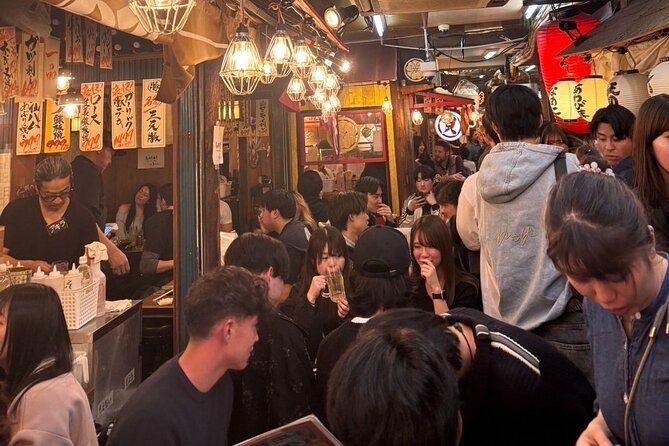
Each stop is allotted about 50 minutes, which accounts for roughly two and a half hours. The remaining time allows for moving between places, gathering the group, and handling the natural pauses of an evening out.
I see this as a tasting route, not a full restaurant crawl. You get three distinct settings and enough time at each to understand the mood. You do not get unlimited time to order whatever you want or linger until midnight.
That pace suits solo visitors and couples who want structure without spending an entire evening with a large group. A maximum of 10 people is especially useful in narrow restaurants and alleys. It also gives Taku a reasonable chance to answer individual questions.
The fixed schedule may be less appealing if you prefer to choose every restaurant yourself. It may also feel brisk if you are a slow eater. The payoff is that you see more than one neighborhood and food style in a single evening.
The value of $65.15 per person
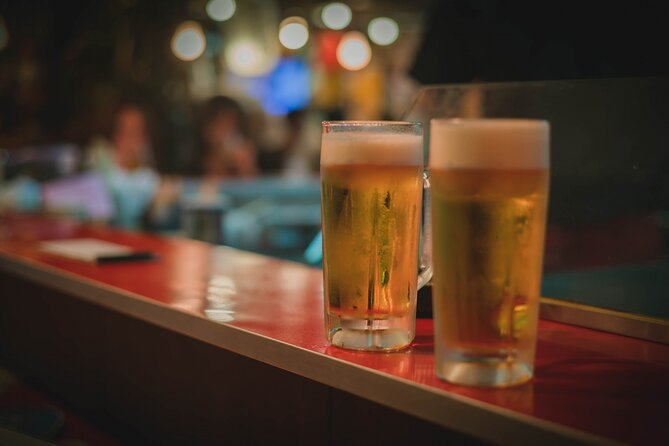
At $65.15 per person, this is not the cheapest way to eat sushi and drink in Tokyo. Food in Japan can be affordable, especially at casual restaurants, so a confident visitor could spend less by making independent stops.
The price makes more sense if you value local translation and social context. You are paying for a three-hour route, an English-speaking guide, help understanding unfamiliar food and drink, and access to a small group rather than a crowded coach.
The fee is harder to judge without a clear breakdown of included dishes and drinks. The stop descriptions list admission as free, but that does not tell you whether the meal and beverages are covered. Before booking, confirm the included food, the included drinks, and any extra spending you should plan for.
That question matters especially here because the three stops involve different kinds of ordering. Oden, sushi plates, sake, and cocktails may not all be handled in the same way. A small extra budget gives you freedom, but you should know about it before the evening begins.
For a solo visitor, the value can be stronger. You get company, a set route, and a guide who can make an unfamiliar nightlife scene easier to enter. For a couple already comfortable ordering in Japan, the cost may feel less compelling unless you particularly want local stories and neighborhood context.
Taku’s role and the English guidance
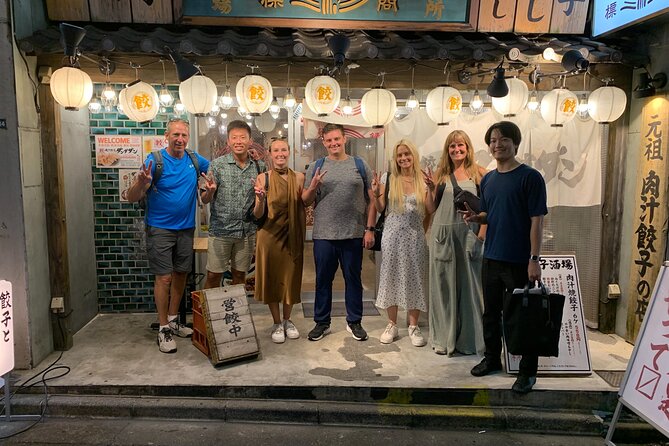
The guide can make or break a food tour, and Taku is central to this experience. The available feedback describes him as attentive to the group’s needs and able to answer a wide range of questions.
That suggests you should use the time actively. Ask about the ingredients in your oden, the restaurant customs at the sushi stop, or the role of Ebisu Yokocho in local nightlife. The tour is most useful when you treat Taku as a cultural interpreter, not just someone who leads you from door to door.
English guidance also reduces the pressure of ordering. You can still make your own choices, but you are less likely to feel stuck when a menu or restaurant process is unfamiliar.
The small group makes this personal. With no more than 10 participants, a question does not have to compete with a busload of people. Solo visitors may find this especially comfortable, while couples can enjoy the social side without giving up all privacy.
Who should book this experience
I would recommend this night to you if you want to meet people, try ordinary Japanese foods, and see Tokyo nightlife through neighborhood restaurants rather than major attractions.
It is a good fit for:
- Solo visitors who want company for an evening out
- Couples who enjoy food with a bit of local explanation
- First-time visitors uncertain about ordering at izakaya or kaitenzushi
- People who want photos in a lively Tokyo food alley
- Anyone interested in sake, Japanese cocktails, and casual dining customs
You may want a different plan if you prefer luxury dining, a long single-course meal, or a highly structured history tour. This is about food, drinks, conversation, and atmosphere. It is not a sightseeing tour built around monuments.
The experience is also not ideal if you need a detailed guarantee of what every dish and drink costs before you go. Ask those questions first, especially if you are keeping to a strict budget.
Booking details that matter
Confirmation is normally provided at booking. If you reserve within one day of the activity, confirmation comes as soon as possible and depends on availability.
The mobile ticket is convenient for a phone-based itinerary. Free cancellation is available up to 24 hours before the start time for a full refund. Cancellations or changes made less than 24 hours before the start time are not accepted, and the local Tokyo cut-off time applies.
The activity has a maximum of 10 participants. It begins and ends at the listed Naka-meguro meeting point, and it lasts about three hours.
Taku can also help you get a Shibuya Sky ticket as an optional extra. Do not treat that as part of the food tour itself. If Shibuya Sky is important to your plans, ask how that assistance works before you count on it.
Should you book this Tokyo food walk?
Book it if you want a friendly, guided introduction to Tokyo’s casual eating and drinking culture. The combination of oden, conveyor belt sushi, sake, cocktails, and Ebisu Yokocho gives you a useful cross-section of night life in two well-connected neighborhoods.
The strongest reasons to go are Taku’s personal guidance, the 10-person limit, and the chance to eat in places that feel connected to local routines. The main caution is price clarity. Confirm what the $65.15 fee includes, then decide if the guidance and company justify the total.
For solo visitors and couples who want more than a restaurant reservation, I think this is a sensible choice. If you already feel comfortable navigating Tokyo’s menus and nightlife alone, you may prefer to spend less and make your own route.
FAQ
How long does the experience last?
The activity lasts approximately three hours.
Where does the tour start?
It starts near Naka-meguro Station at 3-chōme-4-1 Kamimeguro, Meguro City, Tokyo 153-0051, Japan.
Where does the tour end?
The activity ends back at the meeting point.
How many people can join the tour?
The maximum group size is 10 travelers.
Is the tour conducted in English?
Yes. It is fully guided in English by a local guide, Taku.
Can I cancel for a full refund?
Yes. You can cancel at least 24 hours before the experience start time for a full refund. Cancellations or changes made less than 24 hours before the start time are not accepted.
New nights out around Tokyo
- Tokyo: Shinjuku Hidden Japanese Bar Tour (Neon Light City)★ 5.0 · 2 reviews
- ShinjukuUnfiltered Secret bar restaurant Tour,including GoldenGai★ 4.5 · 2 reviews
- Tokyo Shinjuku Bar Hopping –Wagyu , Ramen & 7 Dishes★ 5.0 · 13 reviews
- Shinjuku Underground Nightlife Tour: Izakaya Food & Bar Hopping★ 5.0 · 11 reviews
- Tokyo Izakaya crawl (A tour of 2 izakayas, 1 bar, and a shrine)★ 5.0 · 8 reviews
- Private Tokyo Local Food and Drink Tour with a Bar Hopping Master★ 5.0 · 22 reviews
- Tokyo VIP private nightlife tour with a local insider★ 5.0 · 24 reviews
- Shinjuku: Private Bar Hopping★ 5.0 · 34 reviews
Tokyo Bar Crawls, compared.
Tokyo Bar Hopping Tour in Shinjuku (All-You-Can-Drink + Dinner)
Read our review →
Shinjuku Local Bar and Izakaya Guided Walking Tour
Read our review →
Shibuya Meltdown Nightlife Tour: All-You-Can-Drink Bar Hopping
Read our review →

Shinjuku Bar Hopping with All-You-Can-Drink & Dinner
Read our review →
Shinjuku Nightlife & Secret Backstreets Walking Tour
Read our review →Browse the lists this tour appears in