
REVIEW · CUSCO
Cusco: Peruvian Cooking Class, Cocktails & Local Market Tour
Cusco’s best food lesson may begin before you touch a knife. This four-hour experience starts at San Pedro Market, where you examine potatoes, quinoa, cacao, cheese, bread, fruit, and other staples before walking to a cooking studio in the historic center. You then prepare Peruvian dishes and two pisco cocktails with a chef such as Jesus, Jorge, or Eric.
I like the clear connection between the market and the meal. The ingredients are not just props: they explain why Peruvian food tastes the way it does. I also like the small group of up to 10, which gives the chef room to help with plating, substitutions, and cocktail recipes. The main drawback is that this is partly an assembly class, not four hours of intensive cooking, and the four-hour schedule can feel long if you want a quick activity.
Key points at a glance
- San Pedro Market first: See and taste local cheese, bread, chocolate, cacao, fruit, potatoes, quinoa, and other Peruvian staples.
- Three classic dishes: Prepare cebiche, causa limeña, and quinoa tamal, then finish with picarones and honey.
- Two cocktails included: Make pisco cocktails yourself, with nonalcoholic versions available.
- Dietary needs covered: Vegetarian, vegan, and gluten-free menus are offered, along with sugar-free options for the dessert.
- Small English-language group: The class accepts no more than 10 participants and is taught in English.
- Useful timing: The class can work well during your first days in Cusco, when you want a gentle cultural activity while adjusting.
San Pedro Market sets the table
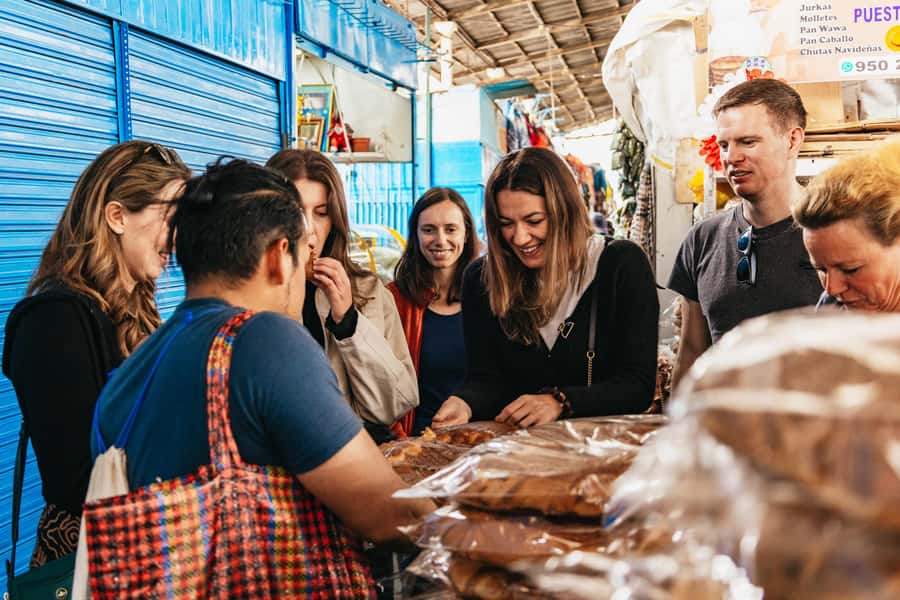
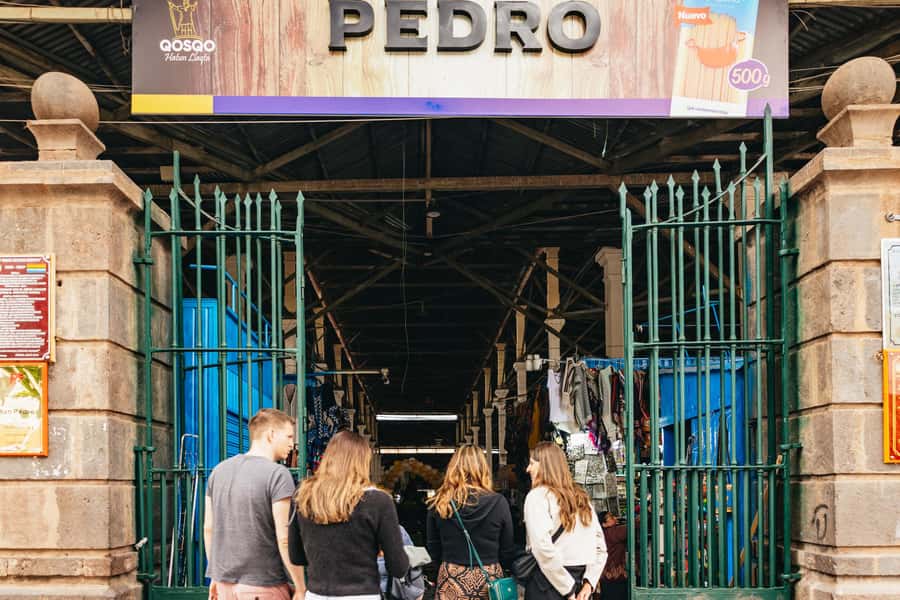
Meet at Door Number 1 of San Pedro Market. This is a practical meeting point, but pay attention to the exact entrance because the market has several doors and the surrounding streets can be busy.
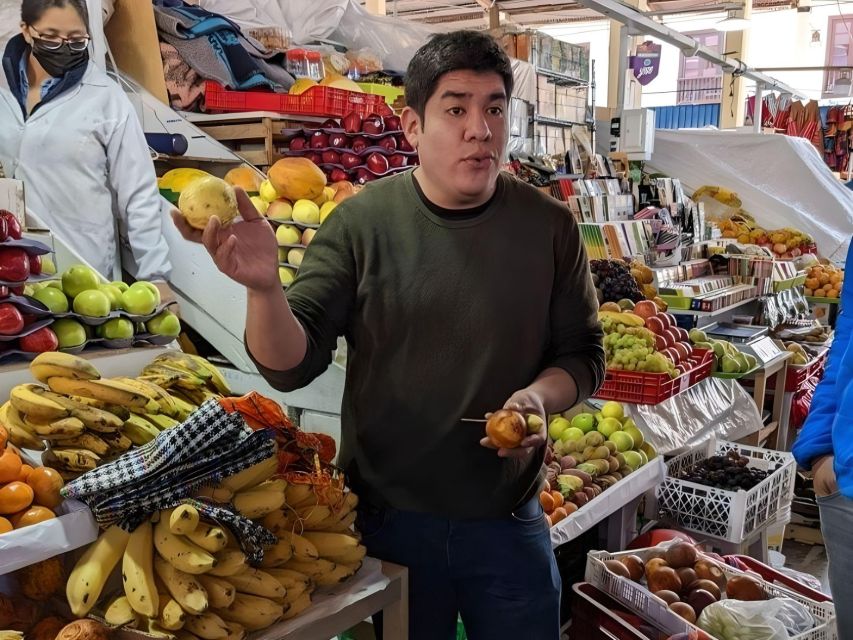
The market portion gives you a fast education in Peruvian ingredients. You might see rows of potatoes, quinoa, bread, cheese, fruit, chocolate, and cacao. The chef explains what you are looking at and how those products fit into local cooking. Some groups also sample cheese, bread, chocolate, coffee, and passion fruit.
I especially like this opening because it gives the cooking class a sense of place. You are not simply handed premeasured ingredients in a polished studio. You first see the foods in the setting where local people buy them, then use that knowledge later at the worktable.
The market is also the most unpredictable part of the outing. It is a working market, not a museum, so the pace and exact stops can vary. On one occasion when San Pedro was closed for cleaning, the guide took the group to another local food market, where ingredients were bought for the class. That backup still offered a genuine market visit, but you should not expect every outing to follow the same route.
Wear comfortable shoes. The market tour and walk to the studio are easy to combine with ordinary sightseeing, but Cusco sits at high altitude, and a relaxed pace is welcome.
More Cocktail Bar Tours in the world:
- Amsterdam: Luxury Saloon Boat Cruise with Cocktails & Waffle
★ 5.0 · 5,935 reviews - Amsterdam: Luxury Saloon Boat Cruise with Cocktails & Waffle
★ 4.6 · 4,393 reviews - Rome Cooking Class: Make Pasta and 3 Spritz Cocktails
★ 5.0 · 2,937 reviews
From the market to a central cooking studio
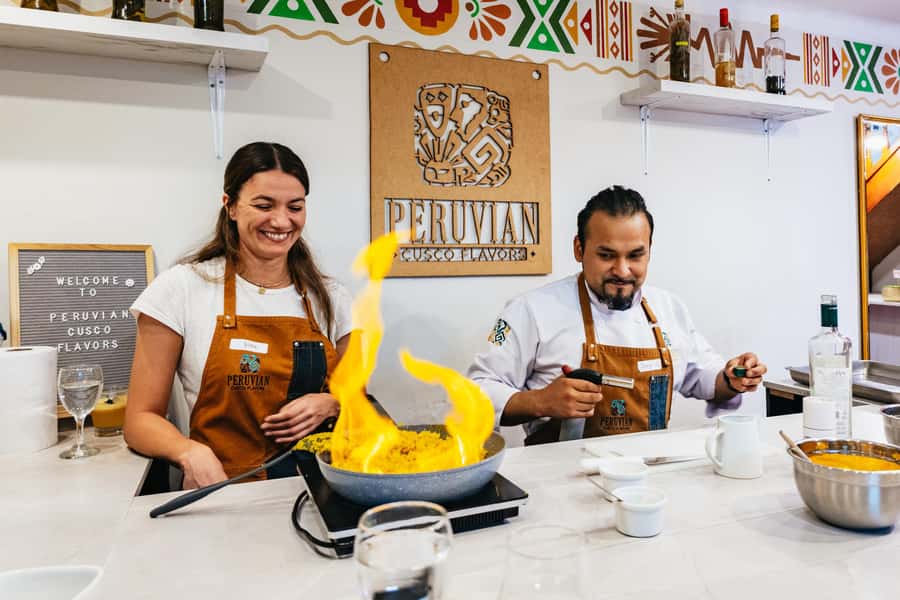
After the market, you take a short walk to a cooking studio in Cusco’s historic center. The change in setting is useful. The market provides the smells, colors, and shopping context; the studio provides clean counters, cooking equipment, and enough space to prepare the food.
Tie on your apron and settle in. The chef explains each dish step by step, with help available as you work. The instructors named in the supplied information include Chef Jesus, Chef Jorge, and Chef Eric, so your exact teacher can vary. All are presented as English-speaking chefs who explain both technique and the cultural background of the food.
The group limit of 10 matters here. You are not lost in a large demonstration. You can ask about a dish, request a change for dietary reasons, or get help with presentation. The class also encourages conversation around the table, which makes it a good activity for solo visitors and couples who want an easy way to meet other people.
The atmosphere is social, but this is not a party class in disguise. The focus remains on food, ingredients, and the story behind each recipe. The pisco cocktails add a festive note without taking over the afternoon.
Two pisco cocktails, with a nonalcoholic choice
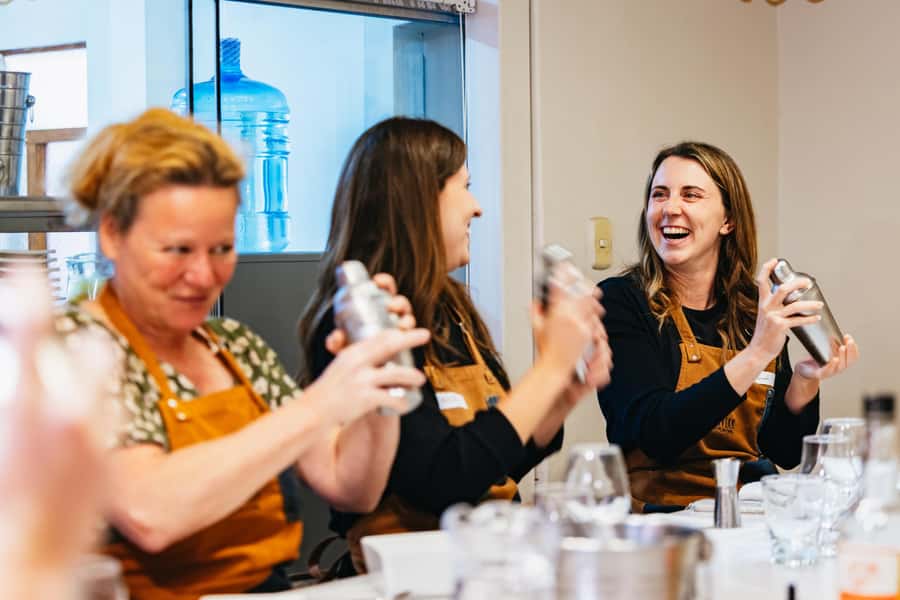
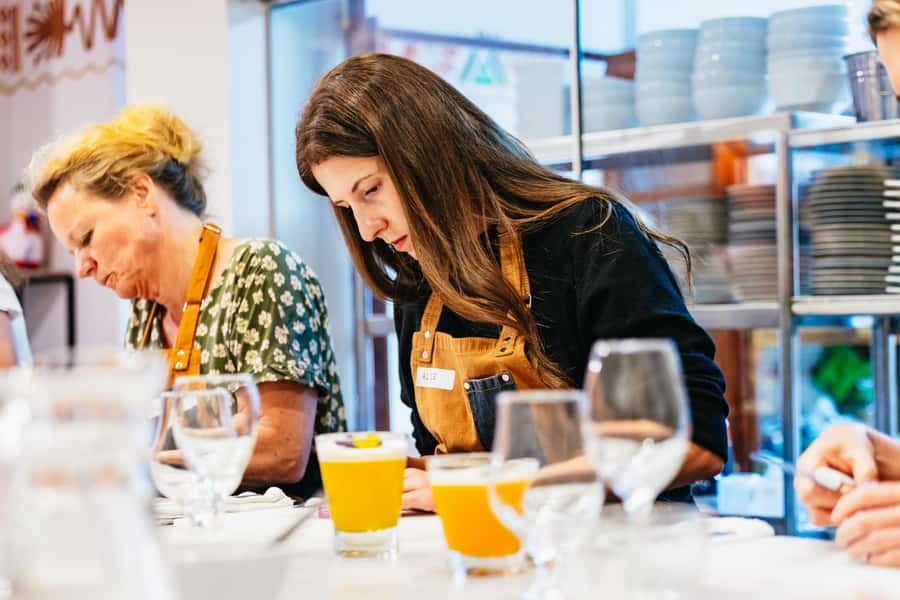
The cocktail lesson comes early in the kitchen session. You prepare two pisco cocktails and drink them during the class. Pisco is Peru’s signature grape brandy, so this portion gives you a taste of a drink closely tied to the country’s food culture.
You make the drinks rather than simply receiving them. That gives the cocktail portion more value than a standard included beverage. The chef guides you through the process and keeps an eye on the group as you work.
You do not need to drink alcohol to enjoy the activity. Nonalcoholic recipes are available, and the class can make mocktails for participants who prefer them. That is a useful option for people acclimatizing to Cusco, anyone avoiding alcohol, and families with older children.
The activity is not suitable for children under 10. The supplied information does not set a separate minimum age for the nonalcoholic cocktails, so families should confirm the details when booking if that point matters to them.
Cebiche brings the sharpest flavor
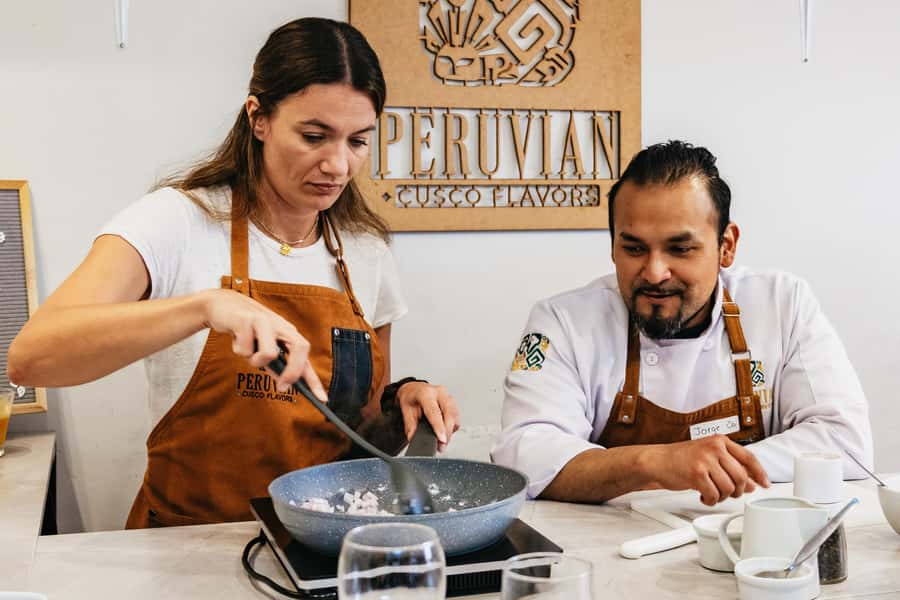
Cebiche is one of the three main recipes. Its bright, fresh profile makes it a good lesson in balance: acidity, seasoning, texture, and the quality of the main ingredient all matter.
The chef explains the method as you prepare the dish. You learn how a familiar Peruvian classic is put together rather than simply tasting it at a restaurant. One participant described the cebiche as especially successful, while several others praised the meal as a whole.
This is also where dietary questions deserve attention. The class offers vegetarian, vegan, and gluten-free menus, but you should state your needs clearly when booking and repeat them at the beginning. One participant reported confusion about a gluten-free request, although other groups had their restrictions handled without trouble.
More market visits around the world:
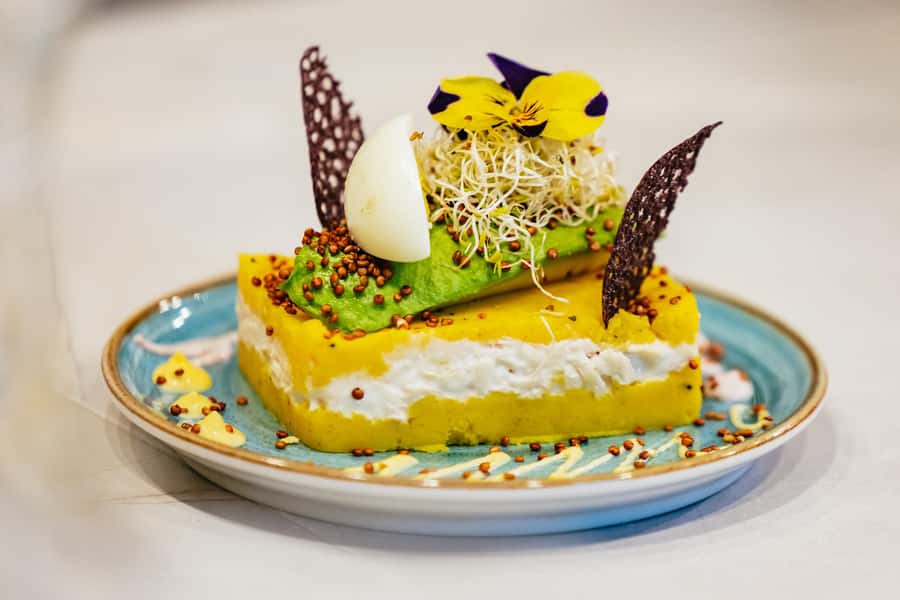
Causa limeña turns potatoes into a work of art
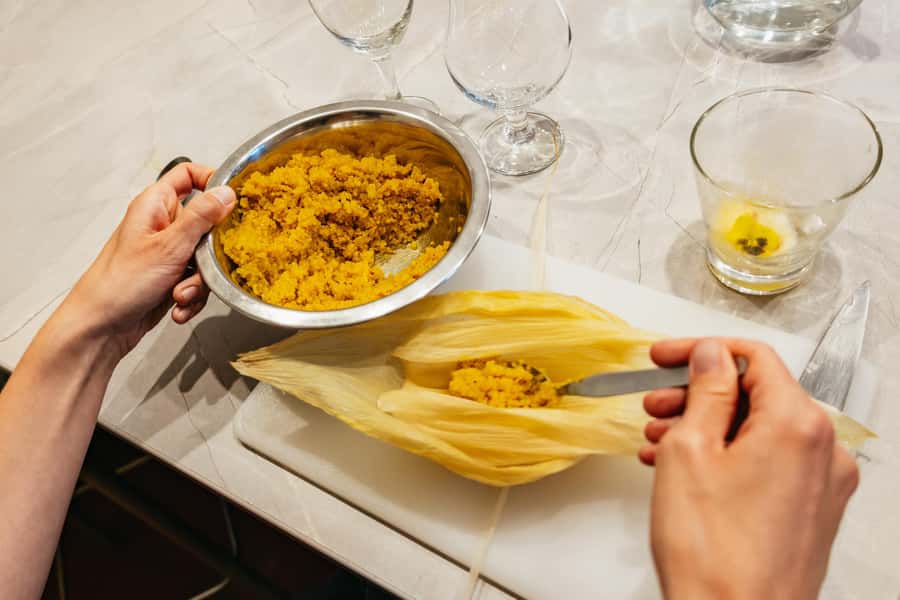
Causa limeña is a layered potato dish seasoned with lime and other ingredients. It is less about complicated stove work and more about texture, seasoning, shaping, and presentation.
This dish is one of the class’s most satisfying hands-on moments. You assemble it with guidance, then learn how to plate it neatly. The result looks more refined than the effort suggests, which gives you a useful recipe to recreate at home.
The class uses local ingredients and explains the place of potatoes in Peruvian cooking. That matters in Cusco, where potatoes are not just a side dish. Peru is famous for its great variety of potatoes, and seeing them at the market makes this recipe feel connected to the region rather than copied from a generic international menu.
Vegetarian and vegan versions are available. The exact substitutions can vary, but the class has experience adapting the dishes so people with different diets can eat together.
Quinoa tamal adds an Andean note
The quinoa tamal brings a highland ingredient into the menu. Quinoa is closely associated with the Andes, and seeing it in the market before using it in the studio helps connect the ingredient to its local setting.
The chef walks you through the preparation, and you enjoy the finished tamal as part of the meal. Some participants describe the overall class as a blend of preparation and assembly. That is an honest way to view it: you take part in the important steps, but the chefs and assistants may handle some advance work so the group can finish several courses within four hours.
That arrangement works well for most people. You get to make the food without spending the entire afternoon on chopping and cleanup. If your ideal cooking class means doing every task from scratch, this may feel less hands-on than expected.
Picarones end the meal on a sweet note
The final tasting is picarones with honey. These Peruvian fritters are a traditional sweet and provide a warm finish after the savory dishes and cocktails.
A sugar-free option is available, and the class also offers a gluten-free menu. Tell the team about dietary requirements before the food preparation begins, not halfway through the meal. The more clearly the chef understands your needs, the easier it is to keep the menu organized.
The meal is substantial. One useful tip is to arrive hungry, since the class includes two drinks, three main preparations, dessert, and samples during the market walk. This is not a small tasting followed by a polite sip of coffee.
What the chef adds to the experience
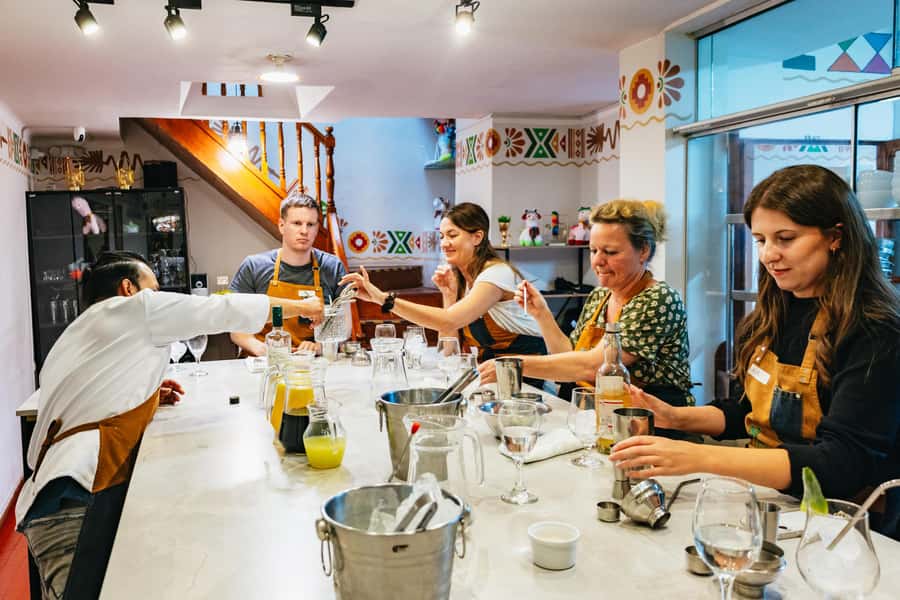
The chef is the key to the quality of this activity. Jesus is described as a strong teacher with a lively personality. Jorge is noted for friendly explanations and a good grasp of Peruvian cuisine. Eric is repeatedly praised for his enthusiasm, stories, and ability to explain ingredients and cultural influences.
Because the guide may vary, I would not book this expecting one specific person unless the provider confirms the assignment. What you can reasonably expect is an English-speaking chef who explains the history of the dishes as well as the instructions.
The best part of the teaching is its practical tone. You learn why an ingredient matters, how a dish is assembled, and how to present it. Some groups receive the recipes by email, which gives the experience value after you return home. Confirm that recipe sharing is still included for your date if having the written instructions is important to you.
Dietary choices are a real strength
This class is a good option for mixed groups. Vegetarian, vegan, and gluten-free menus are available. Nonalcoholic cocktails can be prepared, and a sugar-free dessert option is offered.
That flexibility is not a minor detail. Peruvian menus often rely on potatoes, grains, seafood, meat, and sauces in ways that can be difficult for a group with different needs. Here, the kitchen can adjust the dishes so people do not have to watch others eat a completely separate meal.
Still, do not assume the chef will know every dietary request automatically. Include it in your reservation and mention it again when you arrive. The one reported mix-up with a gluten-free request is a reminder that clear communication matters.
Is $67 a fair price?
At $67 per person, this is not the cheapest way to eat in Cusco. It is also more than the price of a market lunch. The value comes from the number of elements packed into four hours: a guided market visit, ingredient tastings, a professional chef, two cocktails, three dishes, dessert, ingredients, and water.
You are paying for instruction and context, not only food. A restaurant gives you a finished cebiche and causa. This activity shows you the ingredients, teaches you the preparation, and lets you sit down to eat what you made.
The small group improves the value. With no more than 10 people, the chef can help with the dishes and adjust recipes when needed. If you prefer a private lesson or want to spend the entire time cooking from raw ingredients, you may find the format less satisfying. For a first look at Peruvian food, though, the combination is strong.
Free cancellation up to 24 hours before the activity and a reserve-now, pay-later option make it easier to place the class in a changing Cusco schedule. Starting times vary, so check availability before planning other activities around it.
Who should book this Cusco cooking class?
I would choose this for a food-focused visitor who wants more than a restaurant meal but does not want a full professional kitchen course. It suits couples, solo visitors, friends, and mixed-diet groups.
It is also useful early in a Cusco visit. Several participants used it while adjusting before the Inca Trail, and the activity offers a relaxed way to learn about the city without committing to a full-day excursion. You still need comfortable shoes and enough energy for four hours, but there is no demanding hike involved.
Families with children under 10 should choose another activity. Older children and teenagers may enjoy the market samples, mocktails, and presentation work, though the class is conducted only in English.
The final call
Book this experience if you want a practical introduction to Peruvian food, enjoy meeting people at a shared table, and value a market visit as much as the cooking itself. The strongest features are the ingredient-focused market walk, the friendly English-speaking chefs, the small group, and the thoughtful diet options.
Skip it if you want a fast meal, a private class, or intensive cooking from start to finish. For most visitors, the $67 price is justified by the market, drinks, three dishes, dessert, and instruction in one well-filled afternoon.
FAQ
Where does the Cusco cooking class meet?
Meet at Door Number 1 of San Pedro Market in Cusco.
How long does the experience last?
The activity lasts four hours. Starting times vary, so check availability for your preferred date.
What dishes will I prepare?
You will prepare cebiche, causa limeña, and quinoa tamal. The experience ends with picarones and honey.
Are drinks included?
Yes. Two cocktails are included, along with water. Nonalcoholic cocktail recipes are available.
Can the class accommodate dietary restrictions?
Yes. Vegetarian, vegan, and gluten-free menus are available. A sugar-free option is also available for the picarones.
Is the activity offered in English?
Yes. The live tour and cooking class are conducted in English.
New nights out around the world
- St. John Sail with Bar and Hors d’Oeuvres to Lovango Dinner★ 4.5 · 35 reviews
- Mad Scientist Cocktail and Mocktail Lab★ 5.0 · 74 reviews
- Pub Crawl + Party Night (3 Bars +VIP Entrance to a top Club )★ 4.5 · 75 reviews
- A Nightlife Adventure with a Local Guide: Dar es salaam city★ 3.7 · 7 reviews
- California Academy of Sciences Thursday NightLife Admission★ 4.4 · 33 reviews
- London Bar Meetup: Entry, Safe Original Drink & Transfer★ 4.1 · 9 reviews
- San Diego: Club Crawl★ 4.3 · 11 reviews
- Sydney: Secret Bar Guided Tour with Complimentary Drink★ 4.8 · 52 reviews
Cocktail Bar Tours, compared.

Luxury Saloon Boat Cruise with Cocktails & Waffle
Read our review →Luxury Saloon Boat Cruise with Cocktails & Waffle
Read our review →
Rome Cooking Class: Make Pasta and 3 Spritz Cocktails
Read our review →
City Centre Canal Cruise & Free Flower Cocktail
Read our review →
Oahu’s Waikiki Coast: Moana’s Sunset Cocktail Sail
Read our review →
Food & Mixology Tour:Tequila,Tacos, Mezcal and Agave Cocktails
Read our review →
Pasta Cooking Class Near the Colosseum with 3 Spritz Cocktails
Read our review →
Key West Afternoon Snorkel Sail with Unlimited Cocktails!
Read our review →Browse the lists this tour appears in