
REVIEW · BRAZIL
Rio: Carnival Backstage Tour at Samba City with Cocktail
Rio Carnival is not simply a parade. It is a year-round production involving huge floats, thousands of costumes, dancers, musicians, designers, and a fierce competition between samba schools. This tour takes you behind the show at Samba City, where you can see how the spectacle is built and learn why it matters.
I like the costume try-on and the short samba lesson with a professional dancer. I also like the chance to see float work up close, rather than only watching the finished parade from the Sambadrome. The main drawback is the meeting point, which can be confusing among the port warehouses, and indoor photography is not allowed.
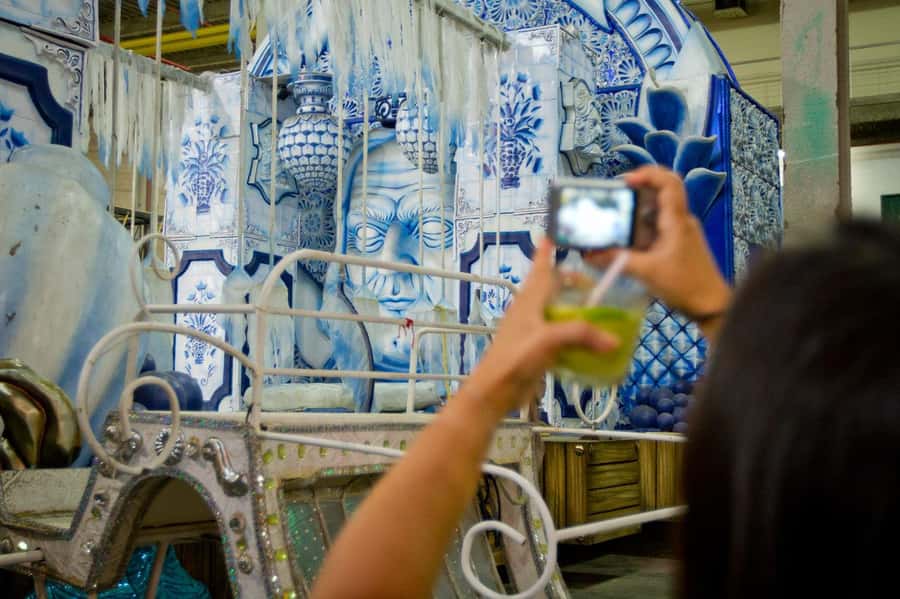
- Grande Rio’s Carnival workshop: See where floats and more than 3,000 costumes are prepared for the parade.
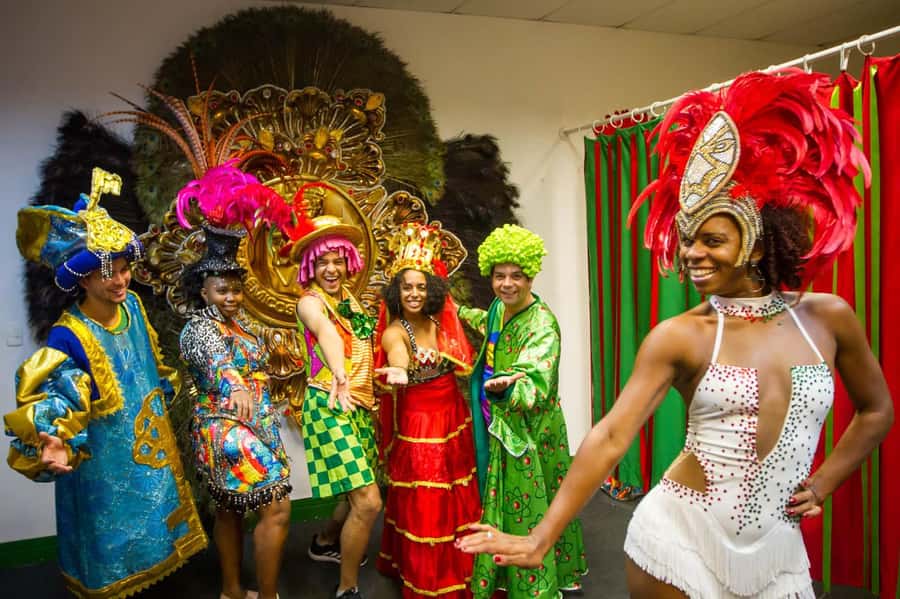
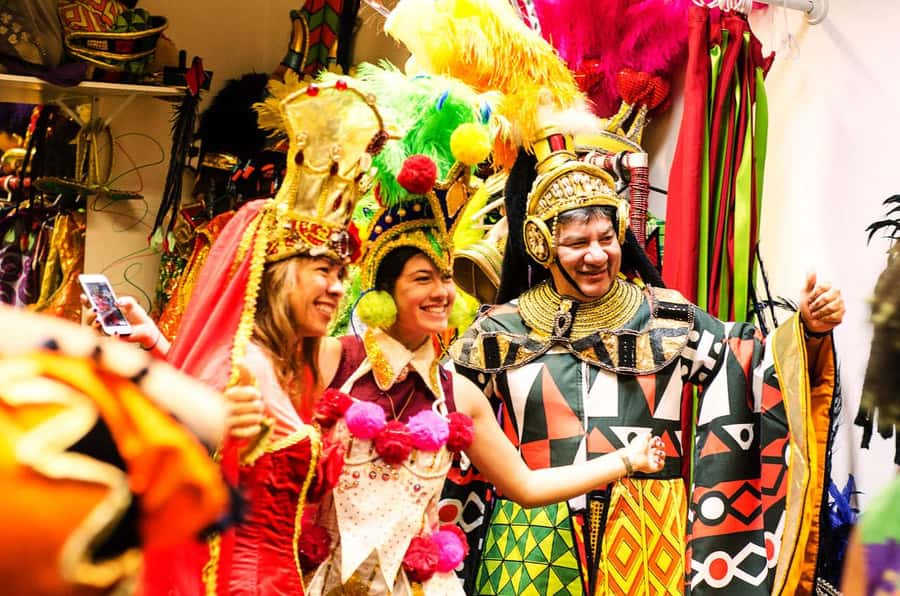
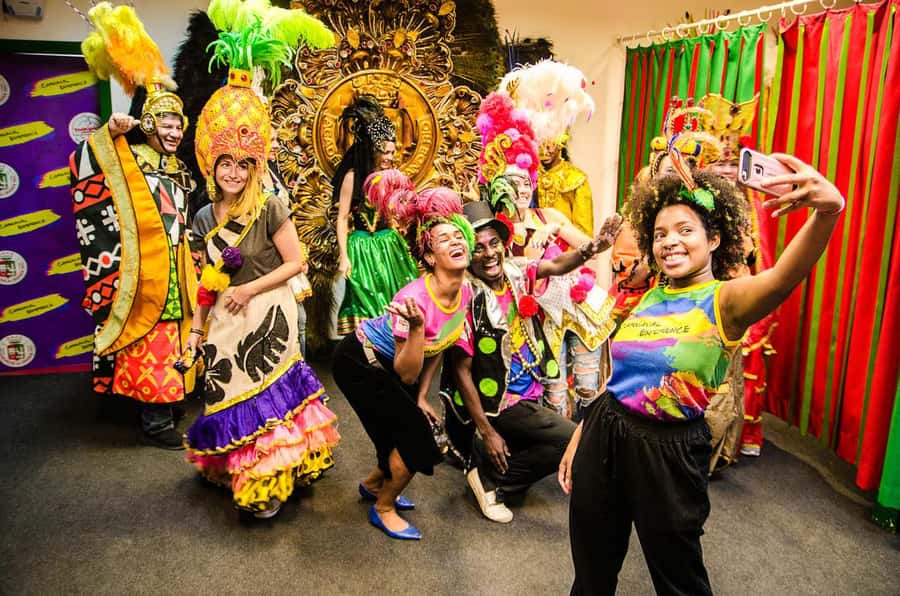
- Costume try-on: Put on authentic parade pieces and take part in a colorful photo moment where photography is permitted.
- Samba lesson: Learn a few basic moves with a professional dancer, regardless of your dance experience.
- Carnival context: Hear how samba schools plan, design, rehearse, and compete throughout the year.
- Caipirinha finish: End the visit with a Brazilian cocktail, with a nonalcoholic option available.
- Useful location: Samba City is near AquaRio, the Rio Star Ferris wheel, and the Cidade do Samba VLT station.
Why Rio Carnival begins long before parade night
The best part of this experience is the shift in perspective. At the Sambadrome, you see a polished burst of color passing by in a few minutes. At Samba City, you begin to understand the labor behind it: planning starts soon after the previous Carnival ends, and each samba school must prepare a complete theme, musical presentation, float design, costumes, choreography, and parade strategy.
That work happens inside a large complex of light brown warehouses in Rio’s port district. The Grande Rio warehouse is the focus of this visit. Grande Rio won the Carnival competition in 2022, and the tour uses its production space, past costumes, displays, and parade material to explain the process.
I would not treat this as a quiet museum visit. It is part workshop tour, part cultural explanation, and part small performance. The guides keep the mood playful, and the costume fitting and dance session make the experience active rather than purely instructional.
Finding Samba City in Rio’s port district
The meeting point is at the main entrance to Cidade do Samba, on Binário do Porto Avenue. It is about 200 meters from AquaRio, almost opposite the Rio Star Ferris wheel and beside the Cidade do Samba VLT station.
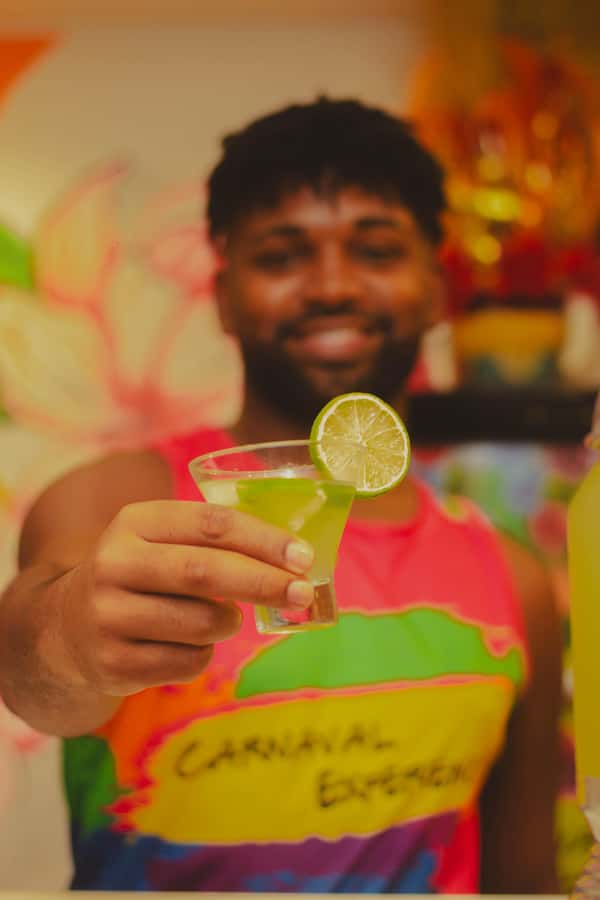
This is the one part that deserves extra care. The complex can look like a collection of working warehouses rather than a polished attraction, so you may wonder if you are in the right place. Look for the Carnaval Experience team in the square or near the Grande Rio warehouse. Staff wear colorful shirts.
If you use the VLT, get off at Cidade do Samba. By car, taxi, Uber, Waze, or Google Maps, search for Carnaval Experience or Cidade do Samba main entrance. Paid street parking is available at 60 Rivadávia Corrêa, but I would allow time to locate the entrance rather than arriving at the last minute.
Optional pickup is available, but transportation is not included in the basic experience. If you arrange a driver, the provider asks that the driver arrive 15 minutes before pickup. Confirm the exact hotel meeting point in advance by phone or WhatsApp.
More Cocktail Bar Tours in the world:
- Amsterdam: Luxury Saloon Boat Cruise with Cocktails & Waffle
★ 5.0 · 5,935 reviews - Amsterdam: Luxury Saloon Boat Cruise with Cocktails & Waffle
★ 4.6 · 4,393 reviews - Rome Cooking Class: Make Pasta and 3 Spritz Cocktails
★ 5.0 · 2,937 reviews
Inside the Grande Rio production space
The tour begins with a walking visit through the Carnival workshop and exhibition areas. You get a practical explanation of how a samba school turns an idea into a parade entry, from the theme and artistic design to the physical construction of floats and costumes.
The scale is what makes this worthwhile. More than 3,000 costumes may be produced for the show, and floats require a large amount of design and construction work before they reach the Sambadrome. Seeing these pieces at close range helps you notice the materials, decoration, size, and labor that disappear when you watch the parade from a seat.
The exact state of production depends on the time of year. In the weeks before Carnival, you may see active preparation and a stronger sense of urgency. Outside the main season, the focus may be more on past designs, displays, and an explanation of the process. One March visit even coincided with the announcement process for the winning samba school, adding a special bit of timing.
You should also keep expectations in check. This is a guided look at the production world, not a guaranteed chance to watch artisans sewing or building every part of a float during your visit. One useful criticism is that seeing costumes already completed is not the same as watching them being made. Still, the workshop setting gives you a far better idea of the operation than a standard Carnival exhibit.
The story behind samba schools and Carnival competition
The guide explains the history of samba and Rio Carnival, including the role of the samba schools and the yearly competition. This context matters because Carnival is not just a party. Each school presents a planned artistic statement and competes for a result that can bring great pride to its community.
The tour also explains how preparation begins almost immediately after the last Carnival. That detail changes the way you watch a parade. A costume is not merely something flashy to wear. It belongs to a theme, a section of the parade, and a larger visual plan.
The guide makes the difference here. Past guides have included Sol, Ton, Lea, Lias, and Jaquel, along with energetic Portuguese, English, Spanish, and other language guides. An Argentine guide was especially praised for bringing warmth and enthusiasm to the explanation. The provider lists English, Portuguese, French, Spanish, German, Hebrew, and Italian.
Most people receive a lively introduction rather than an academic lecture. If you are curious, ask questions as you go. The quality of the visit depends partly on the guide’s energy and willingness to expand on the subject, and one visitor found the guide less eager to answer questions than expected.
Trying on authentic Carnival costumes
The costume session is the tour’s most playful feature. You can put on selected parade costumes and pose for pictures when the staff allows photography. These are not ordinary souvenirs or generic party outfits. They are pieces connected to the visual world of Rio’s samba schools.
The fitting helps you understand how costume design affects movement. A costume must look striking from a distance, work with the theme, and allow the performer to take part in a fast, demanding parade. Even without seeing every construction step, wearing one gives you a small sense of how much design goes into a few seconds of visual impact.
This is especially good for families, couples, and groups of friends because it breaks up the more detailed explanation. You do not need to be a dancer or performer. The point is participation and fun, not looking graceful.
Keep one practical rule in mind: photography inside is listed as prohibited. Follow the guide’s instructions about where photos are allowed. The costume moment may be arranged in a permitted area, but do not assume you can photograph every warehouse, float, or display.
More bar crawls in the world:
- Prague: Entry ticket to Ice Pub Prague with Nightclub Option
★ 4.1 · 5,273 reviews - Pedal Bar Crawl of Old Town Scottsdale
★ 5.0 · 4,254 reviews - Madrid Tapas & Wine Tasting Walking Tour – Small Group Local Bars
★ 5.0 · 3,644 reviews - Tokyo Bar Hopping Tour in Shinjuku (All-You-Can-Drink + Dinner)
★ 5.0 · 3,587 reviews
A short samba lesson with a professional dancer
The samba workshop usually comes toward the later part of the visit and adds movement to the story you have just heard. A professional dancer demonstrates basic Carnival steps, and you get a chance to try them yourself.
You do not need special shoes, training, or a sense of rhythm to take part. The lesson is designed as a light introduction, not a serious dance class. Some tours also include a samba performance, which can be a pleasant surprise and gives you a clearer idea of the speed and style behind the parade.
I like this part because it connects the costumes and music to the human side of Carnival. You have just heard about planning, competition, and production. Then you are asked to move, smile, and try a few steps. It is a reminder that Carnival depends on performers, not just decoration.
If you prefer to watch rather than dance, the atmosphere is informal. The emphasis is on having fun, and the guides tend to encourage participation without making the session feel like a test.
Finishing with a caipirinha
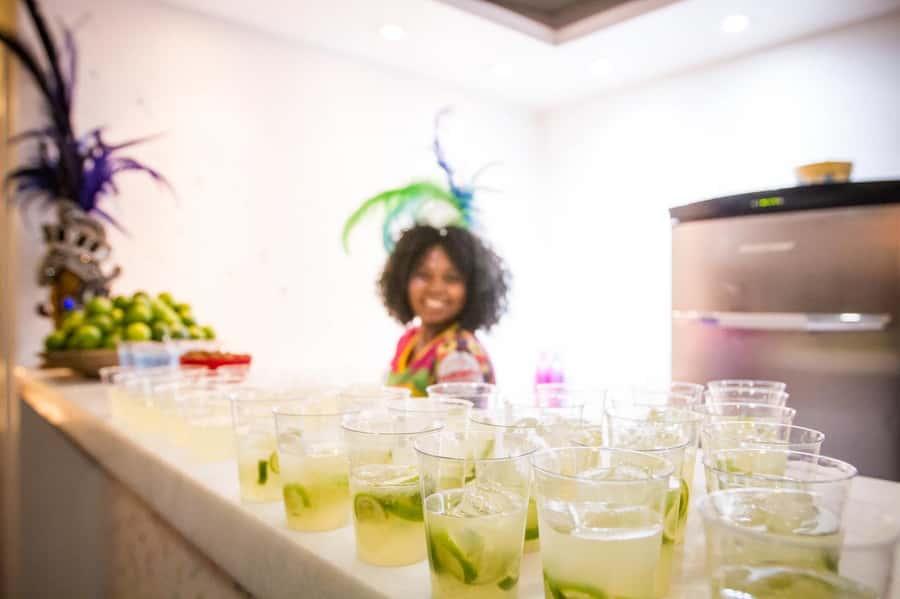
The visit ends with a caipirinha, Brazil’s well-known cocktail, along with water. A nonalcoholic version is available, so this part works for people who do not drink.
At $27 per person, the drink is a small detail, but it gives the tour a pleasant ending. More important is the amount packed into the 90 to 150 minutes: a guided workshop visit, Carnival explanation, costume experience, samba activity, and backstage access.
That makes the price good value for someone who wants more than a sightseeing stop. You are paying for an organized introduction to a major part of Rio’s culture, not simply for a drink and a few costumes. The value is strongest if you plan to attend a parade, watch Carnival coverage, or want to understand why the event requires so much preparation.
How to plan the timing
Allow at least 90 minutes, and be ready for the visit to last closer to 150 minutes. The exact length depends on the starting time, group, guide, questions, costume activity, and dance session.
I would schedule this before visiting a parade if possible. Several people found that the backstage explanation made the Sambadrome experience easier to appreciate. You start noticing the scale of the floats, the organization of the sections, and the amount of work hidden inside the final performance.
The area also works well as part of a port district outing. AquaRio and the Rio Star are close by, and the Museum of Tomorrow can be reached from the area on foot, though the supplied directions indicate that it takes around 20 minutes to walk there. Plan the tour as one stop in a larger day, but do not arrive overloaded with other fixed bookings. The tour can run longer than 90 minutes.
The activity is non-refundable, so check your date and meeting details carefully before booking. Since the meeting point can be hard to spot, save the address and look for the colorful Carnaval Experience shirts.
Who will enjoy this most
I would recommend this tour to anyone visiting Rio during or outside Carnival season. You do not need to attend the parade for the visit to make sense. In fact, it can help you understand what you are seeing if your trip does include a Sambadrome performance.
It suits:
- First-time visitors who want a clear introduction to samba culture.
- Families looking for an activity that includes dressing up and movement.
- Carnival fans who want to see the production side of the event.
- People who enjoy cultural tours with a relaxed, social tone.
- Visitors staying near the port, AquaRio, or the Rio Star.
- Anyone considering a future Carnival trip and wanting to know what lies behind the parade.
It may be less suitable if you want a long, technical tour of float engineering or a guaranteed view of costumes being made in real time. You also need to accept that some areas cannot be photographed.
Is the Samba City backstage tour worth booking?
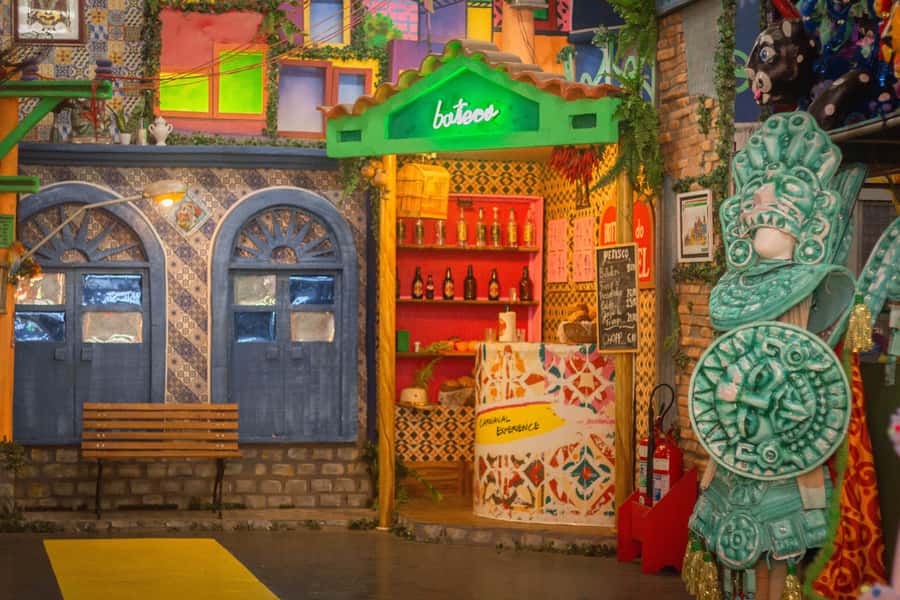
Yes, I would book it if you want a short, affordable way to understand Rio Carnival beyond the music and feathers. The strongest features are the access to Grande Rio’s production space, the chance to wear parade costumes, the samba lesson, and the explanation of how a year of work becomes one parade night.
The tour is not perfect. Finding the entrance can be awkward, the production activity varies by season, and the no-photography rule limits what you can record. But for $27, the mix of culture, behind-the-scenes access, dancing, costumes, and a caipirinha gives you a lot in roughly two hours.
Book it before a Carnival parade if you can. If not, go anyway. Samba City gives you the background that turns Rio Carnival from a spectacular show into a competition built by thousands of people.
FAQ
Where does the Samba City tour meet?
The meeting point is at the main entrance to Cidade do Samba on Binário do Porto Avenue in Rio’s port district. It is near AquaRio, the Rio Star Ferris wheel, and the Cidade do Samba VLT station.
How do I recognize the tour staff?
Look for the Carnaval Experience team in the square or near the Grande Rio warehouse. Staff are identifiable by their colorful shirts.
How long does the tour last?
The stated duration is 90 to 150 minutes. Check the available start times when booking.
Is transportation included?
No. Transportation is not included in the standard activity. Optional pickup can be arranged in advance.
Can I reach Samba City by VLT?
Yes. Get off at the Cidade do Samba station.
What languages are available?
Live guides may be available in French, Portuguese, English, Spanish, German, Hebrew, and Italian.
Is the tour offered in a small group?
A small-group option is available.
Can I try on Carnival costumes?
Yes. The tour includes the chance to wear selected authentic parade costumes.
Is photography allowed inside?
Photography inside is not allowed. Follow the guide’s instructions about any permitted photo areas during the costume activity.
Is the caipirinha included?
Yes. The experience includes an alcoholic drink, and a nonalcoholic option is available according to the tour information.
Does the tour include a samba lesson?
Yes. The program includes a samba workshop with a professional dancer, and some visits also include a samba performance.
Can I park near the meeting point?
Paid street parking is available at 60 Rivadávia Corrêa. Allow extra time to find the entrance and parking area.
New nights out around the world
- St. John Sail with Bar and Hors d’Oeuvres to Lovango Dinner★ 4.5 · 35 reviews
- VIP Haunted Hotel Experience: Ghost Hunting plus Cocktail★ 5.0 · 35 reviews
- California Academy of Sciences NightLife Admission Ticket★ 4.5 · 50 reviews
- San Juan Nightlife Tour in a Private Can-Am UTV Ride & Party★ 4.5 · 31 reviews
- Spirits with Spirits Happy Hour Walking Bar Pub Crawl★ 4.5 · 27 reviews
- Private Seattle Cocktail Tour★ 5.0 · 25 reviews
- Chef Guided Happy Hour Tour – Cocktails, Bubbles and Bites★ 5.0 · 24 reviews
- Downtown Food Tour with Drinks★ 4.5 · 85 reviews
Cocktail Bar Tours, compared.
Luxury Saloon Boat Cruise with Cocktails & Waffle
Read our review →Luxury Saloon Boat Cruise with Cocktails & Waffle
Read our review →
Rome Cooking Class: Make Pasta and 3 Spritz Cocktails
Read our review →
City Centre Canal Cruise & Free Flower Cocktail
Read our review →
Oahu’s Waikiki Coast: Moana’s Sunset Cocktail Sail
Read our review →
Food & Mixology Tour:Tequila,Tacos, Mezcal and Agave Cocktails
Read our review →
Pasta Cooking Class Near the Colosseum with 3 Spritz Cocktails
Read our review →
Key West Afternoon Snorkel Sail with Unlimited Cocktails!
Read our review →Browse the lists this tour appears in