
REVIEW · TOKYO
Shinjuku Izakaya and Golden Gai Bar Hopping Tour
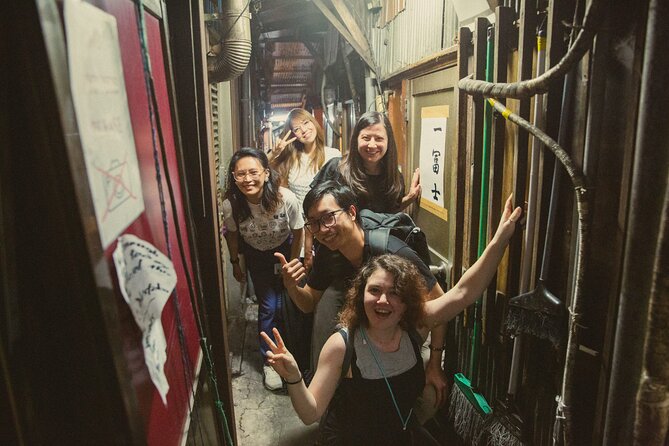
Shinjuku after dark is a maze of glowing signs, tiny food counters, smoky alleys, and bars so small you could miss them while standing beside the door. This tour gives you a local guide, a ready-made dinner, and a reason to step into places you might skip on your own. The strongest guides, including Hiro, Ryota, Tak, and Tetsu, turn a short night out into a useful introduction to Tokyo drinking culture.
I like the way the tour combines Omoide Yokocho and Golden Gai, two very different pockets of old-school Shinjuku. I also like the small maximum of eight people, which makes ordering food and moving through crowded lanes much easier. The main caution is that the experience can vary: Golden Gai may be added to a customized route, and the advertised three-drink plan may feel less structured than some people expect.
Key points at a glance
- Omoide Yokocho first: Start among narrow lanes and traditional izakayas, with yakitori and other small dishes.
- Kabukicho after dark: Walk through Shinjuku’s famous entertainment district, neon signs, Godzilla building, and narrow back streets.
- Golden Gai finish: The route may end among tiny bars in Golden Gai, but its inclusion can depend on the group and itinerary.
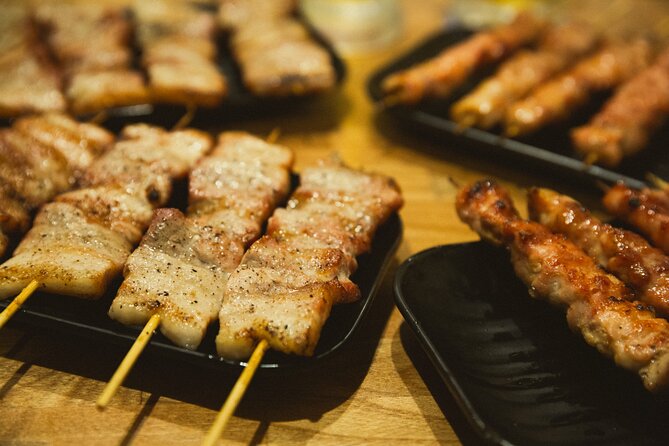
- Food is a major part of the night: Expect 6 to 8 food items, such as chicken skewers, fish, vegetables, and other izakaya dishes.
- One nomihodai stop: At one bar, an all-you-can-drink arrangement is included, so pacing yourself matters.
- Small groups help: The tour accepts no more than eight people, though a solo booking may be uncomfortable if no one else joins.
Why this Shinjuku night works so well
The appeal is simple: Shinjuku is exciting, but it is not always easy to read. A narrow doorway may lead to a respected neighborhood bar, a restaurant sign may be hard to understand, and some places are not set up for a large group of outsiders. With a guide, you can spend less time guessing and more time eating.
This is not a formal history walk with a few token snacks. It is a moving dinner through three districts. You walk, stop for food, drink, walk again, and gradually get a picture of how Tokyo’s after-work drinking culture fits together.
The experience is also a useful first-night choice. Several guides, including Hiro, Ryota, and Tetsu, are praised for explaining food, helping with menus, answering questions, and pointing out places worth returning to later. If you take notes, or save a few locations on your phone, the tour can shape the rest of your Shinjuku stay.
The two-hour length keeps the evening manageable, but it also means the pace can feel brisk. You are not spending a full evening seated in one restaurant. You are moving through the district, with enough time at each stop to eat and drink, but not enough for a slow, leisurely meal.
More Izakaya and Sake Bar Hopping in Tokyo
- Tokyo: Shinjuku Local Bar and Izakaya Guided Walking Tour
★ 4.9 · 1,794 reviews - Tokyo: Shinjuku Local Bar & Izakaya Crawl Tour
★ 5.0 · 890 reviews - Shibuya: Local Bar & Izakaya Crawl
★ 4.9 · 354 reviews
Omoide Yokocho gives you the old Shinjuku mood
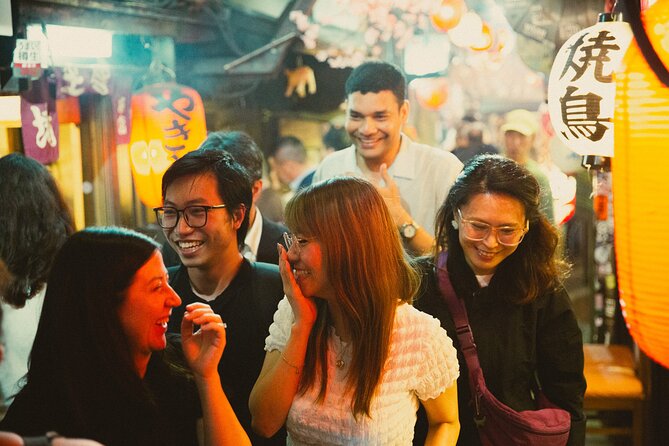
The first stop is Omoide Yokocho, a cluster of narrow lanes near Shinjuku Station. It is often known by the rough translation Piss Alley, though its current appeal is the food, not the nickname. The area is packed with compact izakayas and small counters, giving you an immediate look at a more traditional side of local nightlife.
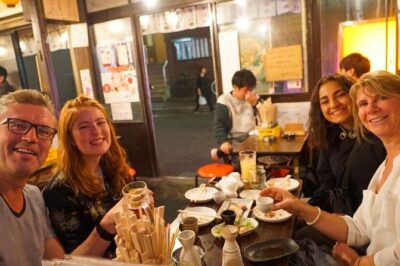
This is where yakitori fits naturally. Skewered chicken is made for a quick stop, and your guide can help explain the different cuts, seasonings, and ways of eating them. The tour may also include fish and vegetables, so the first stop is more than a single plate of grilled meat.
The setting matters as much as the food. Omoide Yokocho is tight, smoky, and intimate. You should expect limited space and a lot of activity around you. That is part of the charm, but people who prefer quiet restaurants, wide tables, or a fixed dinner may find the setting cramped.
You receive no separate admission ticket for this part, and the food and drinks are handled as part of the tour plan. Exact dishes can change, so do not book expecting one fixed menu. The useful thing is having someone guide you through a place where a first-time visitor could easily feel unsure about where to sit or what to order.
Kabukicho shows Tokyo nightlife in bright colors
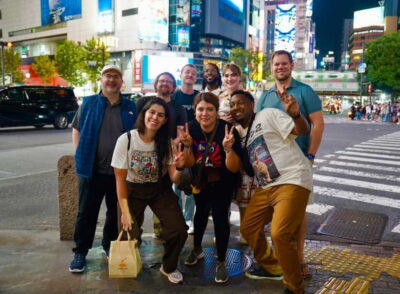
From Omoide Yokocho, the route continues into Kabukicho, Shinjuku’s famous entertainment district. This is the most visually dramatic part of the walk, with large signs, neon, busy streets, narrow side lanes, and the Godzilla building as a familiar landmark.
Kabukicho is often described as a red-light district, but the area also contains restaurants, bars, arcades, entertainment venues, and ordinary streets of late-night dining. The tour gives you a way to see the district without needing to plan a route through it yourself.
I find this section useful because it puts the food stops into context. Shinjuku is not only a collection of restaurants. It is also a major business and drinking center, where office workers, local regulars, and international visitors share the same evening streets.
Your guide may point out extra sights along the way. Some routes have included a pachinko parlor or a newer entertainment complex, while others focus more tightly on food and drink. That flexibility is helpful, but it also means the walking portion is not identical every night.
You should stay with the group here. Kabukicho is easy to navigate badly, especially after drinking, and the streets can look similar once the signs start competing for your attention. The guide is especially valuable for keeping the route simple and helping you return to the station or hotel area afterward.
The food is generous, so arrive hungry
The tour includes three alcoholic drinks and roughly 6 to 8 food items. That is enough to count as dinner for many people, especially because izakaya meals arrive as a series of small plates rather than one large entrée.
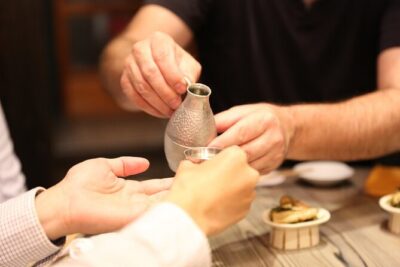
Possible foods include yakitori, fish, vegetables, and other Japanese bar dishes. Some guides also introduce drinks such as sake, Japanese whisky, and Hoppy, a Tokyo-style drink made with a nonalcoholic beer-like mixer and spirits. The point is variety, not a single refined tasting menu.
You should not eat a full meal before meeting the group. Several accounts describe the food as plentiful, and one guide even offered the choice of ramen or dessert on a customized route. Arriving hungry gives you room to enjoy the food without feeling overfull after the first stop.
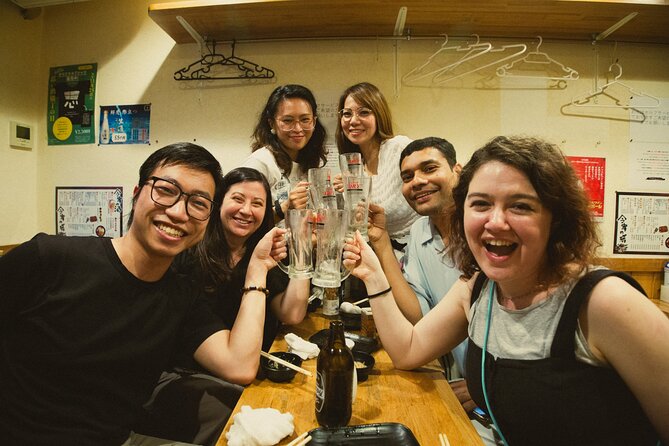
The food also creates an easy social rhythm. A plate arrives, the guide explains it, people ask questions, and conversation starts around the table. If you are hoping to meet other people, this is more natural than standing in a bar and trying to begin a conversation from scratch.
There are important limits. The tour does not accommodate vegetarian, halal, gluten-free, or allergy-related requests. If you have a serious dietary restriction, this is not a safe booking. The tour is built around shared Japanese drinking food, and substitutions are not promised.
Same city, another round:
- Tokyo Bar Hopping Tour in Shinjuku (All-You-Can-Drink + Dinner)
★ 5.0 · 3,587 reviews - Shibuya Meltdown Nightlife Tour: All-You-Can-Drink Bar Hopping
★ 5.0 · 1,058 reviews - Tokyo: Pub Crawl and Bar Tour
★ 4.5 · 951 reviews - Tokyo: Shinjuku Bar Hopping with All-You-Can-Drink & Dinner
★ 4.9 · 440 reviews
Nomihodai can be fun, but pace yourself
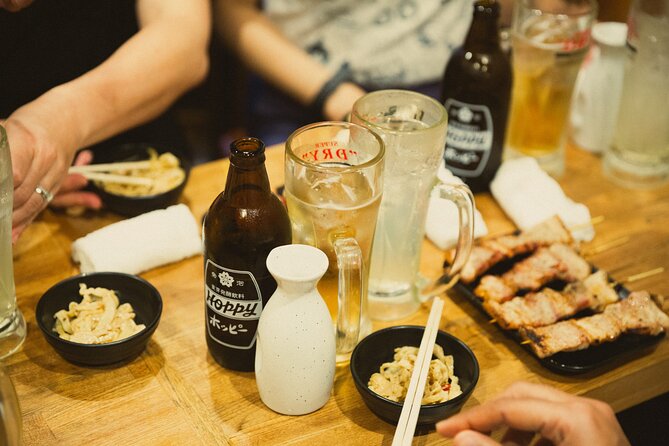
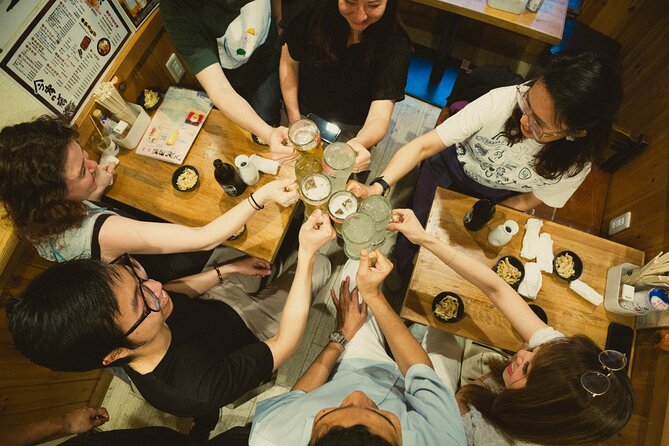
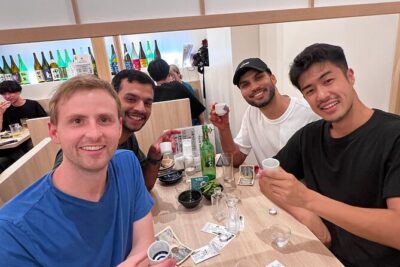
One stop includes nomihodai, or all-you-can-drink service. This is a classic Japanese group-drinking format and can be a good way to try several drinks without ordering each one separately. It also helps explain why the tour has a social, informal feel rather than a quiet tasting-room atmosphere.
The catch is obvious: you can drink too much quickly. The tour lasts only about two hours, and you may already have had a drink before reaching the nomihodai stop. Japanese whisky, sake, beer, and mixed drinks can add up faster than expected.
I would treat the all-you-can-drink period as a chance to sample, not a challenge to consume as much as possible. Drink water when you can, eat steadily, and remember that the route continues on foot. You may finish in Golden Gai when you are already feeling the alcohol.
The minimum drinking age is 20. Anyone under 20 receives soft drinks instead. The tour also asks you not to arrive already very drunk, which is a sensible rule for a walking group moving through crowded nightlife districts.
Golden Gai is the best finish, when included
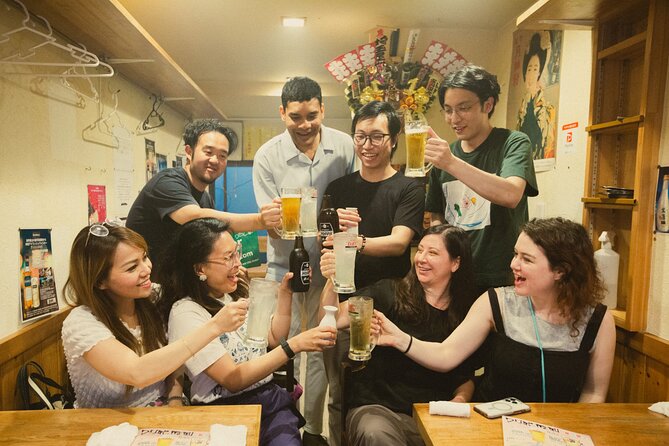
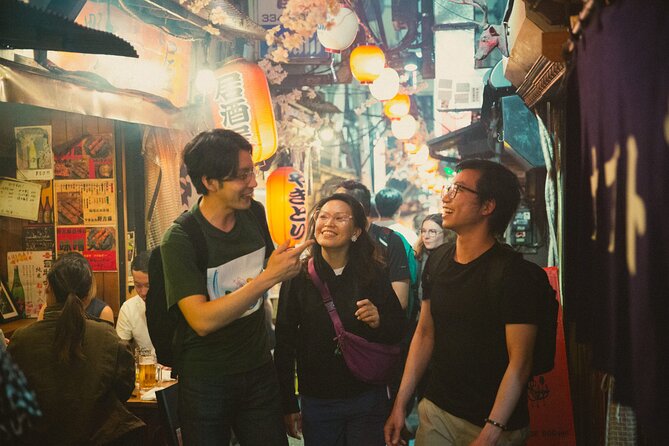
Golden Gai is made up of hundreds of tiny bars and narrow lanes near Kabukicho. Many bars have only a handful of seats, and some are designed around a particular owner, theme, or regular crowd. The atmosphere changes from one doorway to the next.
The tour can finish here, and this is often the most memorable part of the route. You get to see a side of Shinjuku that is difficult to approach without local help. A guide can explain how the area works, choose a suitable place, and help you avoid wasting time wandering from door to door.
Still, you should understand the wording around Golden Gai. It may be included in a customized itinerary, and the exact venues are not guaranteed. Some groups spend more time in the izakayas or the all-you-can-drink restaurant, while others reach Golden Gai for drinks at the end.
That uncertainty is important if Golden Gai is your main reason for booking. Contact the provider before the tour if the final stop matters greatly to you. The general route points toward Golden Gai, but the evening can be adjusted around weather, group preferences, timing, and the guide’s plan.
Golden Gai is also not simply a sightseeing display. You are entering working bars, often with very little room. Keep your voice down, follow the guide’s lead, and avoid treating the neighborhood like a photo set. The experience is better when you respect the small scale of the place.
The guide makes the biggest difference
The strongest feature of this tour is the guide. The food is useful, but the guide determines whether the evening feels relaxed and personal or rushed and confusing.
Hiro receives especially warm praise for being friendly, attentive, and helpful with both food and local customs. Ryota is known for making newcomers feel comfortable and for offering extra suggestions after the formal tour. Tak is described as easy to understand, funny, and strong on stories about food and sake.
Tetsu, a Tokyo native, has helped people read intimidating menus and find additional sake spots after the tour. Other guides, including Kiyo, Yota, Jimmy, Sean, Amigo, and Tsuyoshi Mutoh, have led routes with different styles. Some are very social and entertaining. Others focus more on directions, food, or local facts.
That variety can work in your favor, but it also explains why no two evenings will feel exactly alike. One guide may keep the conversation flowing; another may offer more walking and less commentary. A few people have found the guide less talkative than expected.
English ability appears to be strong overall, though the level of explanation can vary by guide. If the guide is not drinking, do not take it as a problem. Staying sober while managing a moving group is a sensible job requirement, and several guides have still been praised for making the night enjoyable.
The $99.10 price: fair for dinner and guidance
At $99.10 per person, this is not a bargain pub crawl. It is a paid dinner experience in one of Tokyo’s more expensive and difficult nightlife areas. The value depends on how much you want help with food, ordering, neighborhood navigation, and social connection.
The price includes three alcoholic drinks and 6 to 8 food items, plus the guide and the nomihodai stop. You do not pay extra for normal admission to Omoide Yokocho or Kabukicho, though additional drinks, food, transportation to the meeting point, hotel transfers, and anything not listed are excluded.
For a first visit to Tokyo, I think the price can be justified. You are paying to avoid guesswork in places where menus may be unfamiliar and bars may be intimidating. You also receive a full evening meal rather than a single tasting.
For a confident Shinjuku regular, the value is less certain. If you already know where to eat, speak Japanese, and are comfortable entering tiny bars, you might spend less by building your own evening. The tour earns its price through access, direction, and companionship rather than luxury.
Group size, solo bookings, and practical fit
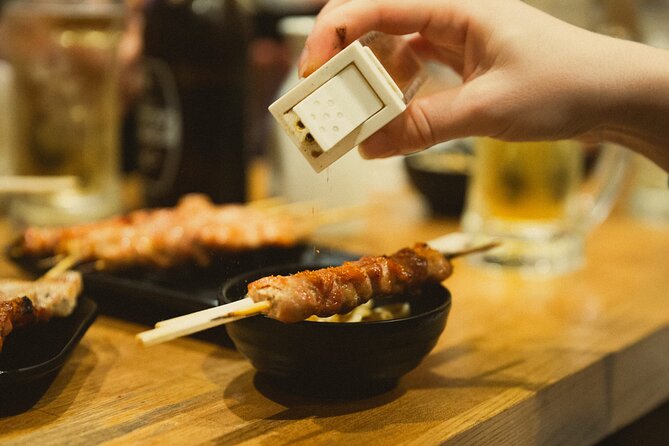
The maximum group size is eight. That is a good limit for narrow lanes and compact restaurants. It also gives you a reasonable chance to speak with the guide and ask questions without shouting across a large group.
Solo bookings need more thought. If other people book the same evening, the tour can be a friendly way to meet a group. If nobody else joins, you may be alone with the guide. One solo woman left early because she did not feel comfortable drinking in a red-light district with a guide she did not know, even though she found him polite.
That does not make the tour unsuitable for solo visitors, but it does make the group situation worth checking. If you prefer company, ask whether other bookings are confirmed. If you want a private route, a solo booking can allow more flexibility, as happened on one customized evening led by Amigo.
You need moderate physical fitness. The tour includes walking through busy streets and standing or sitting in compact venues. Wear comfortable shoes and keep your evening schedule open enough that you do not need to rush away midway through the route.
The meeting point is Tajimaya Coffee at 1-chome-2-6 Nishishinjuku. The route ends around Golden Gai in Kabukicho, not back at the starting café. That is useful if you want to continue drinking nearby, but remember that you must arrange your own way back afterward.
Best timing and how to prepare
I would book this near the beginning of your Tokyo stay. The route helps you understand where Omoide Yokocho, Kabukicho, and Golden Gai sit in relation to one another. You can then return later with more confidence and choose the places that fit your style.
Bring a phone with the mobile ticket ready, but avoid spending the evening staring at it. Save the meeting point before you leave, and allow enough time to find Tajimaya Coffee. The tour is in central Shinjuku, but the station area can be confusing.
Eat lightly earlier in the day, not immediately before the tour. Since the food count can reach 8 items and one venue offers nomihodai, a full dinner beforehand will work against you.
You can cancel for a full refund up to 24 hours before the start time. Changes or cancellations within 24 hours are not refunded, and poor weather may lead to a different date or a full refund. The tour requires good weather, so keep an eye on the forecast.
Should you book the Shinjuku bar-hopping tour?
Book it if you want a guided first look at Shinjuku nightlife, enjoy small Japanese dishes, and like meeting people over drinks. It is especially useful for first-time visitors who would not feel comfortable choosing a tiny izakaya or Golden Gai bar without help.
I would also recommend it to couples and small groups who want dinner with local context rather than a standard restaurant reservation. Guides such as Hiro, Ryota, Tak, and Tetsu can add practical value through menu help, neighborhood advice, and suggestions for later in the trip.
Think twice if you need strict dietary accommodations, dislike alcohol-centered evenings, or want a fixed three-venue route with a guaranteed stop at Golden Gai. The night has some flexibility, and the guide, group, and final route can shape the result.
For most suitable bookers, the combination of food, walking, and local direction makes the $99.10 worthwhile. Just arrive hungry, pace your drinks, and treat the tour as an introduction to Shinjuku rather than a perfectly scripted pub crawl.
FAQ
How long does the Shinjuku Izakaya and Golden Gai Bar Hopping Tour last?
The tour lasts approximately two hours.
What food and drinks are included?
The experience includes three alcoholic drinks and approximately 6 to 8 food items. Possible items include yakitori, fish, vegetables, sake, Japanese whisky, and other izakaya dishes.
Is Golden Gai guaranteed to be part of the route?
Golden Gai can be included in a customized itinerary, but the exact route and venues may vary. If visiting Golden Gai is essential, contact the provider before booking.
What is the minimum drinking age?
The minimum drinking age is 20. Soft drinks are served to anyone under 20.
Can the tour accommodate dietary restrictions?
No. The tour does not accommodate vegetarian, halal, gluten-free, or allergy-related requests.
What is the cancellation policy?
You receive a full refund if you cancel at least 24 hours before the start time. Cancellations or changes made within 24 hours are not refunded. If poor weather cancels the experience, you are offered another date or a full refund.
New nights out around Tokyo
- Tokyo: WARP SHINJUKU Nightclub Ticket with Drink / VIP Plan★ 4.2 · 55 reviews
- Tokyo: Shinjuku Bar Hopping & Night Walking Tour★ 4.6 · 137 reviews
- Shibuya Meltdown Night Tour: All-You-Can-Drink Bar Hopping★ 4.8 · 183 reviews
- Tokyo: Shinjuku Local Bar Hopping Walking Tour★ 5.0 · 186 reviews
- Tokyo: Shibuya Local Bar & Izakaya Crawl Tour★ 5.0 · 218 reviews
- Tokyo: Shinjuku Nightlife & Secret Backstreets Walking Tour★ 4.8 · 229 reviews
- Shibuya: Local Bar & Izakaya Crawl★ 4.9 · 354 reviews
- Tokyo: Shinjuku Bar Hopping with All-You-Can-Drink & Dinner★ 4.9 · 440 reviews
Izakaya and Sake Bar Hopping, compared.
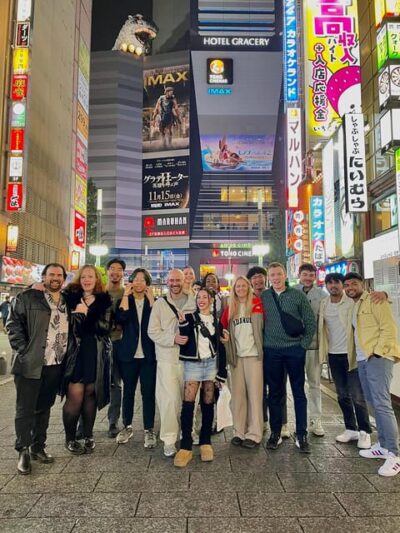
Shinjuku Local Bar and Izakaya Guided Walking Tour
Read our review →
Private Food & Sake Tour in Central Kyoto with Sake Sommelier
Read our review →Browse the lists this tour appears in